Gold's 5,000-year history as a safe-haven asset produced one of its most dramatic chapters in January 2026. Gold hit an all-time high of $5,602.22 per troy ounce on January 28, 2026, a price that would have been unthinkable even five years ago, when gold traded at $1,700 per ounce. The record was driven by a perfect storm of geopolitical risk, record institutional demand, and systematic central bank diversification away from the US dollar. JPMorgan forecasts the rally is not over, with a year-end 2026 target of $6,000 and $6,300 in 2027.
As of June 12, 2026, gold has corrected to $4,195, a 25% pullback from the January peak as improving Iran peace deal signals and recovering equity markets reduced safe-haven urgency. But the structural forces that drove gold to $5,602 have not disappeared. For investors, understanding whether gold's correction is a buying opportunity or a trend reversal is one of the most important portfolio questions of 2026.
What Happened
Gold's journey from $2,000 to $5,602:
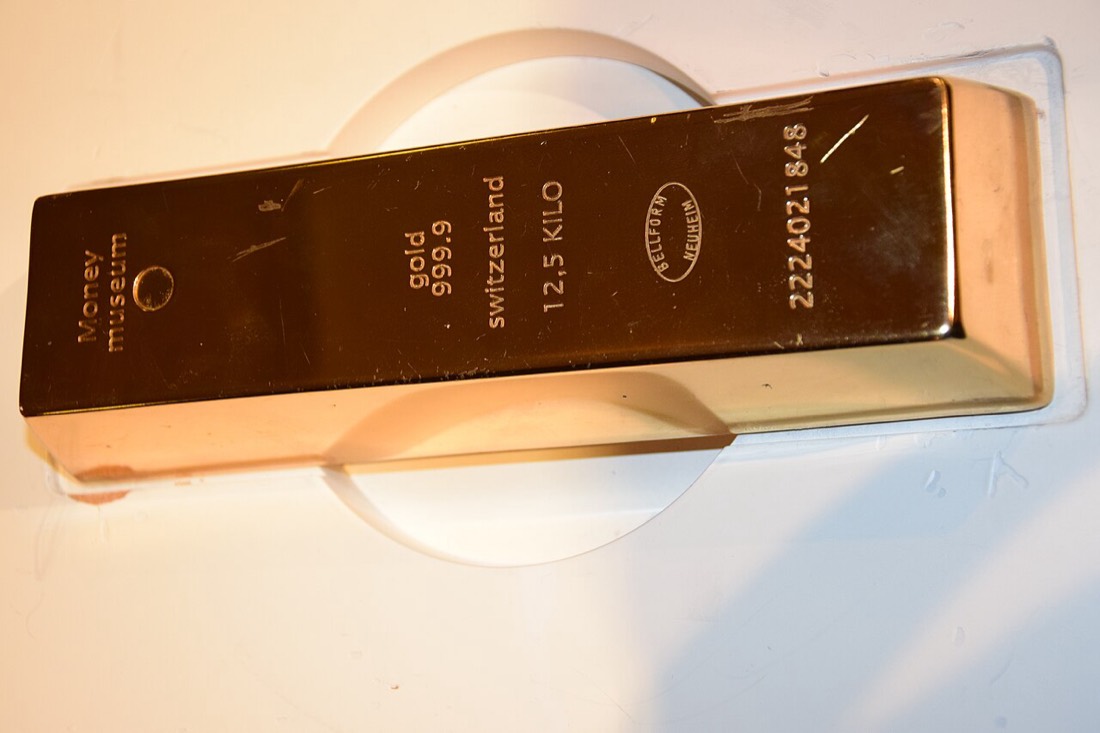
Gold had already broken above $2,000 in 2023 and climbed steadily through 2024 and 2025, but the acceleration in early 2026 was extraordinary. The January 2026 ATH of $5,602 represented a 60% gain in approximately 12 months, an extraordinary return for an asset that typically moves 10 to 15% in a year.
January 28, 2026: The $5,602 record. The trigger was a combination of breaking geopolitical news: escalating Iran-US-Israel tensions that raised the spectre of a broader Middle East war, fresh China-Taiwan friction reports, and US tariff announcements from the Trump administration that renewed fears of a trade-driven global recession. All four of these factors simultaneously increase gold's safe-haven premium.
The institutional demand surge. The World Gold Council's 2025 Annual Demand Trends report showed global gold demand reached an all-time high of 2,175 tons in 2025, up 84% year-on-year. This was not consumer jewellery demand (which is more price-sensitive and tends to fall when prices rise). This was institutional bars, coins, and ETF inflows, pension funds, sovereign wealth funds, and family offices building structural gold allocations that had been absent from portfolios for decades.
Central bank buying remains the structural driver. Central banks, particularly from China, India, Poland, Czechia, and Middle Eastern nations, have been net buyers of gold for four consecutive years. The reason: diversification away from USD-denominated reserve assets following the 2022 US-Russia sanctions that froze $300 billion in Russian central bank dollar reserves. Any central bank that observed that episode has a strategic reason to hold more gold and fewer US Treasuries. This structural central bank bid provides a floor for gold prices that did not exist before 2022.
The correction from $5,602 to $4,195. Gold peaked on January 28 and has fallen approximately 25% through June 12. The correction had three phases:
- February-March 2026: Mild profit-taking after the record; gold stabilised above $5,000 initially.
- April-May 2026: Broader risk-off unwinding as the Iran crisis appeared to de-escalate temporarily; gold fell toward $4,500 as equity markets recovered some losses.
- June 2026: Further correction to $4,195 as Iran peace deal signals intensified and safe-haven demand diminished sharply.
Why This Matters for Investors
At $4,195, gold is still 90% above its 2022 levels of $1,700 and 75% above its pre-pandemic levels of $1,500. From a long-term perspective, even the current "corrected" price represents extraordinary gains for investors who held gold through the last four years. The question is whether gold at $4,195 is a bargain versus JPMorgan's $6,000 target, or whether the easy gains are behind us.
The structural case for gold in 2026-2027 remains intact:
-
Central bank buying will not stop. The Weaponization of Dollar Reserves in 2022 was a permanent strategic wake-up call for all non-Western central banks. China, India, and Middle Eastern sovereign wealth funds are committed to reducing USD concentration. This creates a multi-year structural demand floor.
-
Fiscal deficit spending across major economies increases monetary debasement risk. The US fiscal deficit is running at approximately 6% of GDP. Japan's debt-to-GDP exceeds 250%. European nations face aging population fiscal pressures. Gold is the classic hedge against governments that are printing money to service debts. Higher government debt across the developed world structurally supports gold demand.
-
Geopolitical risk is not resolved. Iran, Taiwan, Russia-Ukraine, and US-China trade tensions all remain active variables. Any re-escalation in any of these theatres would push gold back toward its January highs.
For Indian investors, gold serves dual purposes, an inflation hedge and a currency hedge. When the rupee weakens against the dollar, gold's INR price rises even if the dollar gold price is flat. Gold priced above Rs 1 lakh per 10 grams in 2026 was a psychological milestone that reflected both international gold strength and the rupee at Rs 86-88 to the dollar. Indian households hold an estimated 25,000 tons of gold, the largest private stockpile in the world, making India uniquely sensitive to gold price moves.
Tax treatment in India is now more favourable for gold. In the Union Budget 2024, the government reduced long-term capital gains tax on gold from 20% with indexation to 12.5% without indexation for holding periods above 24 months. This makes holding gold as a financial asset more competitive with equities.
Market Reaction
The January 2026 gold ATH triggered a surge in Indian retail and institutional gold investment. Gold ETF inflows reached their highest-ever monthly levels in February 2026, as retail investors who missed the first move tried to ride further gains. Sovereign Gold Bond (SGB) issuances (though limited in 2026 due to budgetary constraints on subsidy costs) were oversubscribed.
International market reaction was divided. Equity investors largely saw high gold prices as a warning signal, gold's $5,602 ATH coincided with significant equity market stress. When gold began correcting in May-June 2026 as equity markets recovered on Iran peace deal signals, the inverse correlation between gold and equity market confidence was clearly on display.
Silver and other precious metals followed gold's trajectory but with higher volatility (typical of their higher beta to gold). Silver hit its own multi-year high near $65-70 per troy ounce in early 2026 before correcting to the $30-35 range by June.
What Investors Should Watch
JPMorgan's $6,000 target by year-end 2026 requires a re-escalation of safe-haven demand. The specific scenario would be: Iran peace deal collapses or is rejected; a new geopolitical flashpoint emerges; US recession indicators trigger Fed rate cuts that weaken the dollar (which supports gold); or central bank buying accelerates further. If any two of these conditions materialise simultaneously, $6,000 gold is realistic.
The gold-to-silver ratio (currently elevated above 100x) is a valuation signal watched by precious metals investors. When this ratio compresses, gold falls or silver rises, it often signals a broadening of precious metals demand into industrial metals, which typically accompanies economic improvement.
India's SGB calendar for FY27. If the government issues new SGB tranches (Sovereign Gold Bonds, Indian government bonds denominated in grams of gold), these are the most tax-efficient way for retail investors to access gold returns with an additional 2.5% annual interest. Watch the RBI calendar for FY27 issuances.
Central bank gold purchase data from the World Gold Council is published quarterly. Any deceleration in central bank buying would be the single most bearish structural signal for gold, as institutional buying has been the primary driver of the 2022-2026 gold bull market.
Risks to Monitor
The 25% correction from $5,602 to $4,195 may continue if macro conditions improve. If the Iran peace deal is signed and validated, equity markets recover substantially, and the S&P 500 approaches Goldman's 8,000 target, the risk appetite shift would push investors from gold back into equities. In this scenario, gold could correct further toward $3,500-4,000, which is still 75%+ above 2022 levels but a further 5 to 15% decline from current levels.
Dollar strength is gold's primary short-term enemy. Gold is priced in dollars, so a stronger dollar makes gold more expensive for non-US buyers and reduces demand. If the Fed maintains rates at 3.5% or higher while other central banks cut, the dollar strengthens, which is a headwind for gold even in an environment of genuine physical demand.
The ETF speculation component may unwind. A portion of the gold buying in 2025-2026 was speculative momentum trading through ETFs rather than structural safe-haven positioning. When that momentum reverses, it can create violent short-term selling. The $400-500 move down from $5,602 in the weeks after the January peak had an ETF profit-taking component.
Gold at $4,195 on June 12, 2026 sits at the intersection of two powerful narratives: the structural bull case built on central bank diversification, fiscal deficit fears, and geopolitical risk premium, and the short-term bear case built on improving macro sentiment, recovering equities, and Iran peace deal hopes. JPMorgan's $6,000 target by year-end means they expect the structural drivers to reassert themselves. Whether that happens depends primarily on geopolitics, the one variable that nobody can reliably predict.