India's economy ended FY26 with numbers that surprised even optimistic forecasters. GDP grew 7.7% for the full year and 7.8% in the January to March quarter alone, beating estimates of 7.0 to 7.3% and accelerating from 7.1% in FY25. The data confirms India remained the fastest-growing major economy in the world through the fiscal year ending March 2026, even as global conditions grew increasingly difficult in the second half.
The numbers were released by MoSPI on June 6, 2026, and immediately caught analyst attention. SBI Research called it an upside surprise, and the reaction in markets was broadly positive, though quickly tempered by the more pressing concern of what FY27 holds given the oil price shock that began in March.
The story inside the data is worth understanding: India's services economy ran at a pace that most developed economies never see, and manufacturing held up better than feared despite global supply disruptions.
What Happened
India's GDP grew 7.7% in FY26 at constant prices, compared to 7.1% in FY25. In the final quarter of the year, January to March 2026, growth came in at 7.8% in real terms and 9.1% in nominal terms.
Services were the primary growth engine. The tertiary sector expanded 9.3% in Q4, driven by two standout sub-categories. Trade, hotels, transport, communication, and broadcasting grew 12.5%, reflecting strong domestic consumption, a recovery in travel and hospitality, and strong freight activity. Financial, real estate, and professional services grew 10.4%, indicating healthy credit growth and property market activity.
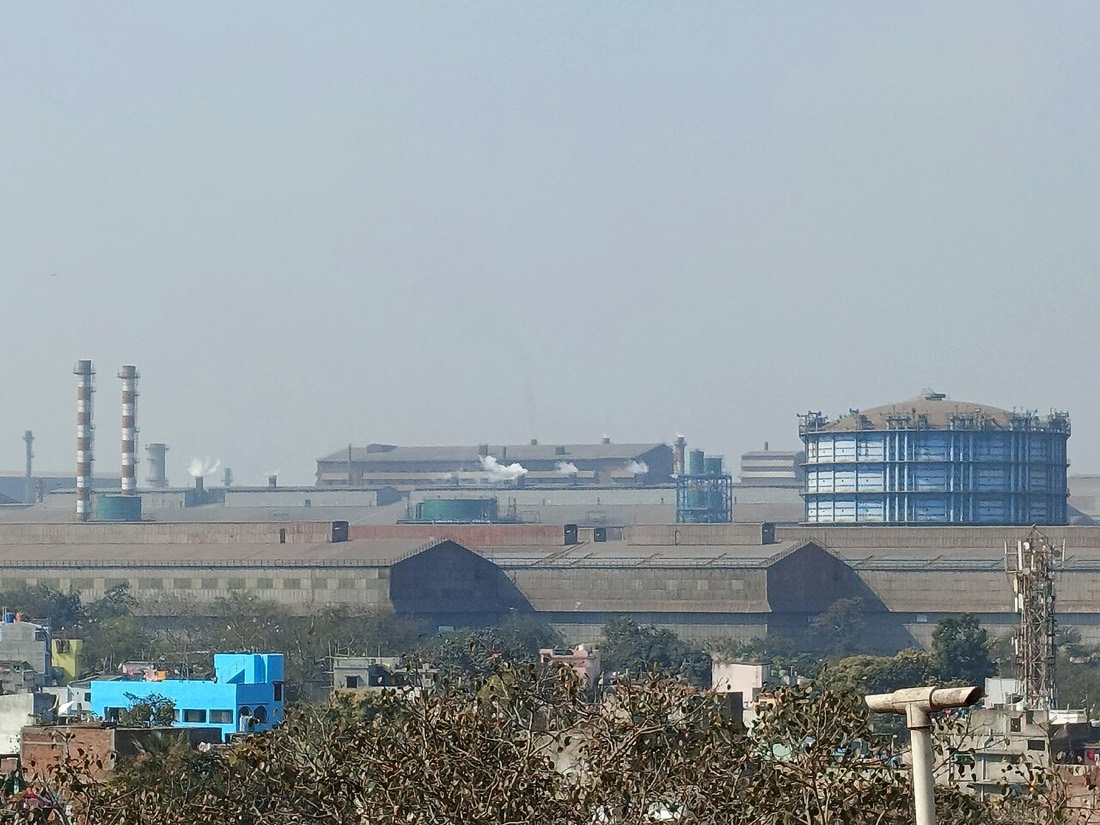
Manufacturing grew 7.3% in Q4, a moderation from Q3's 12.8%, but still solid. For the full year FY26, manufacturing growth was 10.7%, one of the strongest readings since the post-Covid recovery. Construction expanded 8.4% in Q4, reflecting continued infrastructure spending under the National Infrastructure Pipeline.
Private consumption and capital formation both grew above 7.5% for the full year, suggesting the growth was broad-based rather than concentrated in one sector or driven entirely by government spending.
Why This Matters for Investors
A 7.7% GDP number is the backdrop against which corporate earnings for FY26 will be evaluated when Q4 results are fully reported. When the economy grows at that pace, revenue growth for consumer-facing businesses, banks, and industrials is typically strong. Companies operating in trade, logistics, hospitality, and financial services should show strong Q4 FY26 performance consistent with the sector-level GDP data.
For equity investors, the FY26 GDP data supports the view that India's fundamental economic trajectory remains intact. The concern is not where India came from but where it is going. The RBI's revised FY27 forecast of 6.6% reflects the headwinds building from the oil price shock and global uncertainty that began in late February 2026.
The contrast between a 7.8% Q4 and a 6.6% FY27 forecast captures the economy's transition from a pre-crisis to a post-crisis environment. The oil shock, the rupee depreciation, and the FPI outflows that define 2026's macro story all largely post-date the Q4 FY26 period.
Market Reaction
Equity markets received the GDP data positively but the reaction was muted, partly because markets had already moved on to pricing in FY27 concerns. The data was filed away as confirmation that India's economic base was strong going into the current year's turbulence, not as a catalyst for fresh buying.
Sectors that directly reflect the GDP data, financials, consumer discretionary, and industrials, saw mild positive sentiment. IT services, which benefit from domestic demand through their large Indian workforce but are primarily driven by global client spending, were less directly affected by the domestic GDP print.
Bond markets noted the strong Q4 numbers as evidence that the RBI does not face an urgent growth emergency, which slightly tempered expectations for an immediate rate cut at the August MPC meeting.
What Investors Should Watch
The Q1 FY27 GDP data, which will cover April to June 2026, will be the first full-quarter reflection of the oil crisis impact. That data will be released in late November 2026 by MoSPI. Until then, quarterly corporate earnings and high-frequency indicators like GST collections, PMI data, and e-way bills are the best proxies for whether growth is holding or deteriorating.
GST collections for April and May 2026 are already available and will provide a read on consumption trends in the months immediately following the oil shock. Strong GST collections would support the view that domestic demand is resilient. Weak collections would confirm the RBI's growth concern.
Monthly PMI data for manufacturing and services, released on the first working day of each month, is the fastest real-time read on economic momentum. A PMI above 50 signals expansion; below 50 signals contraction. Watch whether the services PMI, which has been running strongly, stays above 55 through the oil shock.
Risks to Monitor
The oil shock that began in late February 2026 is the primary risk to sustaining FY26-style growth into FY27. Higher fuel costs compress household disposable income, raise input costs for manufacturers, and widen the current account deficit. All three effects reduce GDP growth.
The RBI's 6.6% forecast may itself prove optimistic if crude oil stays elevated through the second half of 2026. If the Iran peace talks fail and oil stays above $90, India's FY27 growth could slip below 6.5%.
India's external position, a weaker rupee and wider current account deficit, also constrains the fiscal response. The government has limited room to cut fuel taxes further without significantly widening the fiscal deficit at a time when it needs to maintain fiscal credibility with global rating agencies.
The FY26 GDP print is India's strongest evidence that its economic fundamentals remain sound. The question for investors is whether that foundation is strong enough to absorb the shocks of 2026 without permanently denting the growth trajectory that produced 7.7%.