India's startup ecosystem has quietly continued building wealth-creation stories even as the IPO market has been choppy and global risk appetite for emerging market equities has moderated. India added four new unicorns in the first five months of 2026, bringing the total count to 131 and cementing India's position as the world's third-largest unicorn ecosystem. The four additions span payments infrastructure, AI compute, consumer fintech, and space technology, a breadth that reflects how India's innovation economy has matured beyond just software services and e-commerce.
The global ranking, third behind the United States at 1,194 and China at 248, is itself a remarkable position for an economy that barely had two or three unicorns a decade ago.
What Happened
January 2026: Juspay joins the unicorn club. Bengaluru-based Juspay, which builds the payment processing infrastructure embedded inside major Indian consumer apps, reached the $1 billion valuation milestone in its latest funding round. Juspay's payment SDKs are integrated into apps used by hundreds of millions of Indians for UPI transactions, card payments, and checkout flows. The company is the invisible plumbing behind India's digital payments experience for many consumers who have never heard the Juspay name.
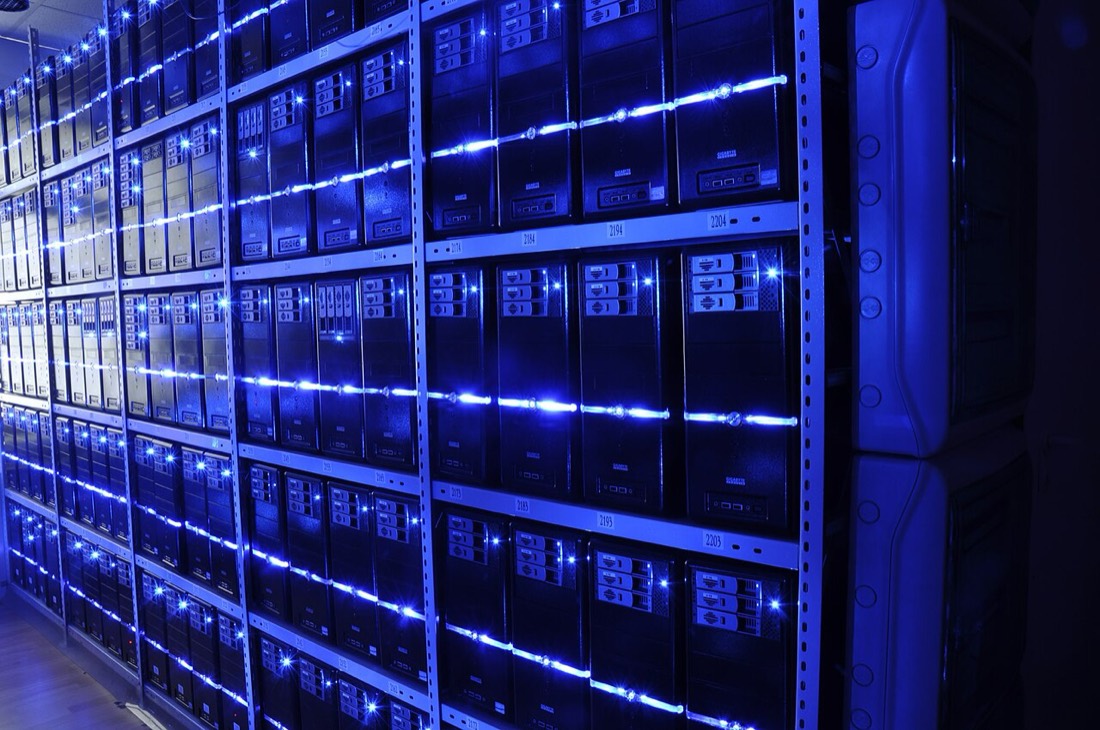
February 16, 2026: Neysa becomes India's most valuable new unicorn. Neysa, an AI cloud infrastructure company that provides GPU compute capacity to AI developers and enterprises in India, raised a $600 million Series B round led by Blackstone, valuing the company at $1.4 billion. The $600 million Series B was the largest single round raised by an Indian startup in the Series B stage, reflecting the extraordinary capital intensity of AI infrastructure and the willingness of global institutional investors to allocate large sums to India's AI compute story.
April 2026: KreditBee achieves unicorn status. KreditBee is a Bengaluru-based consumer lending fintech that provides small personal loans to salaried and self-employed individuals. The company's target market is the large segment of working Indians who have limited credit history with traditional banks but demonstrate creditworthiness through alternative data signals. KreditBee's unicorn round reflects continued investor interest in India's consumer lending market, despite the broader NBFC sector facing NPA concerns in unsecured loans.
May 7, 2026: Skyroot Aerospace becomes India's first space tech unicorn. Skyroot raised a $60 million Series C round at a valuation exceeding $1 billion, making it the first Indian startup in the space launch sector to achieve unicorn status. Skyroot builds the Vikram series of small satellite launch vehicles and has conducted successful launch demonstrations. The company is positioned to serve the growing global demand for small satellite launches as private space activity accelerates.
February 16, 2026: Neysa becomes India's most valuable new unicorn.
Why This Matters for Investors
The sectoral diversity of 2026's four new unicorns is telling. Payments infrastructure (Juspay) reflects India's digital payment economy now generating $1 billion-plus value businesses. AI infrastructure (Neysa) reflects the GPU compute shortage and India's emerging position as an AI workload processing hub. Consumer fintech (KreditBee) reflects India's credit inclusion opportunity. Space technology (Skyroot) reflects India's New Space policy enabling private launch vehicles.
For public market investors, the unicorn pipeline matters as a future IPO supply indicator. Many of India's current unicorns will pursue IPOs in the 2026 to 2030 window. Zepto, already filing for a 2026 listing, was once a unicorn. NSE, though not a startup, is another large upcoming issue. Understanding which sectors are generating unicorn formation helps investors anticipate where IPO supply will come from in the next three to five years.
Neysa's $1.4 billion valuation from a $600 million single round is particularly notable for what it says about the AI infrastructure investment thesis. The investors behind this round, Blackstone at the forefront, are betting that India will become a significant AI compute market. With TCS, Infosys, and Wipro deploying 300,000 AI seats and India's startup ecosystem building AI-native applications, the demand for GPU compute in India is real and growing.
Market Reaction
The individual unicorn announcements generated significant attention in the Indian startup and venture capital community, though direct public market reactions are limited since none of the four new unicorns are listed.
Skyroot's achievement as India's first space unicorn had symbolic significance beyond the financial milestone. India's New Space policy, which opened rocket launches and satellite missions to private sector players starting in 2020, has created an entirely new vertical in the Indian startup ecosystem. Skyroot joining the unicorn club validates that policy's commercial potential and may attract more venture capital to the Indian space technology sector.
Neysa's funding round attracted attention from the broader tech community as it is one of the largest rounds in Indian startup history and among the largest AI infrastructure investments in any Asian market. Global institutional interest in Indian AI infrastructure at that scale suggests the investment community sees India as a serious AI economy, not just an AI services provider.
What Investors Should Watch
Neysa's GPU utilisation rate and revenue growth are the key metrics for tracking India's AI infrastructure story. If Indian enterprises are genuinely paying market rates for GPU compute, Neysa's revenue should scale rapidly. Watch for any revenue or capacity utilisation disclosures from the company, which may appear in regulatory filings or fundraising documents.
Skyroot's next launch milestones are the operational proof points for India's space startup sector. Successful commercial launches for paying satellite customers would confirm that India's private space sector is moving from demonstration to commercial operation.
KreditBee's asset quality in a challenging consumer credit environment is important context for the consumer fintech lending sector. With India's unsecured personal loan NPA rates rising across the NBFC sector in 2025 and 2026, the quality of KreditBee's loan book at the time of its unicorn valuation deserves scrutiny. High valuations in consumer lending can unwind quickly if default rates move against the model.
The city distribution, Bengaluru with 55 unicorns against Mumbai's 22, reflects how India's startup ecosystem has developed geographic concentration. Watch whether cities like Pune, Hyderabad, and Chennai are producing more unicorns in 2026 and 2027 as startup ecosystems outside Bengaluru mature.
Risks to Monitor
Global venture capital funding tightening is the structural headwind for unicorn formation. The number of new Indian unicorns has already moderated from the peak of 44 in 2021 and 23 in 2022. Four new unicorns in five months of 2026 is a respectable pace but far below the 2021 peak. If global VC funding remains constrained, fewer companies will cross the $1 billion valuation threshold in the near term.
IPO market conditions affect unicorn strategy. Companies that raised at high valuations in 2021 and 2022 face the challenge of either listing at lower valuations (as Zepto is doing, accepting a 15 to 20% cut from its last private round) or staying private longer and risking investor fatigue. The backlog of profitable-but-unlisted unicorns represents latent IPO supply that needs the right market conditions to unlock.
For Skyroot specifically, the space launch business has significant technical risk. A failed launch, while not unusual in the space industry, can damage customer confidence and fundraising prospects. India's ISRO has decades of experience and has had failures; private space companies carry the same technical risk without the government's balance sheet behind them.
India's unicorn story in 2026 is one of diversification: payments, AI compute, consumer lending, and outer space in the same year. The era when unicorns were almost exclusively e-commerce and software-as-a-service is over. Deep tech, infrastructure, and space are now producing billion-dollar companies in India, which is a meaningful signal about where Indian entrepreneurship is heading.