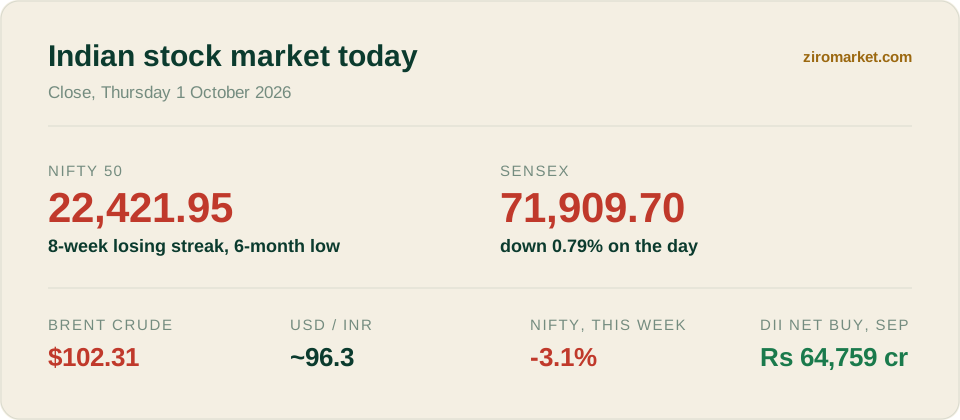
Relief did not last the weekend. The Nifty 50 closed at 22,421.95 on Thursday 1 October 2026, down 198.50 points or 0.88%, and the Sensex closed at 71,909.70, down 570.59 points or 0.79%, as Brent crude's jump back above $100 added fresh pressure to a market already down for the week. Markets were shut on Friday 2 October for Gandhi Jayanti, so Thursday's print is the latest close.
The losing run keeps extending. The Nifty fell about 3.1% and the Sensex about 2.7% for the week, which multiple market reports describe as an eighth consecutive losing week, the longest such streak in 25 years, touching a fresh six-month low along the way. The 2001 benchmark of nine straight down weeks, during the dot-com bust, the Ketan Parekh scam and the aftermath of the September 11 attacks, is now the number the first full week of October will be measured against.
The trigger for Thursday's fall was external rather than domestic. Reports that the US is sending a third aircraft carrier strike group toward the Middle East, alongside China halting most October fuel exports, pushed Brent crude up 4.4% to $102.31, undoing the relief Indian markets had been pricing from oil's late-September dip.
Why did the market fall again?
Oil came back first. Brent crude jumped 4.4% to $102.31 on 1 October 2026 after reports that a third US aircraft carrier, the USS Theodore Roosevelt, is heading toward the Middle East and that major Chinese refiners suspended most October fuel exports, reversing a move that had briefly taken Brent down to about $97, covered in full in our third US carrier and oil spike piece and tracked on our crude oil price today page. India imports more than 90% of the crude it burns, so a fresh spike feeds straight back into the import bill and the rupee.
The second push is still American. The Federal Reserve's policy rate has stood at 3.75 to 4.00% since 16 September, and the US 10-year Treasury yield touched a 19-year high near 5.1% before easing slightly, the mechanism our US 10-year yield at 5% explainer covers. Higher US yields keep it more attractive to hold dollars than emerging-market equities.
The rupee absorbed both. The rupee weakened further as oil jumped, moving back toward 96.3 to the dollar, as our rupee versus dollar today page tracks, within a rupee of its record low of 96.96 set in May 2026.
Who is buying while foreigners sell?
Indian households, mostly through mutual funds. DIIs bought a record Rs 64,758.56 crore of Indian equities in September 2026, extending a streak of 38 consecutive months of net buying since August 2023 worth Rs 20.19 lakh crore, funded in large part by record SIP inflows of Rs 32,297 crore in August, while FIIs sold more than Rs 36,000 crore over the same month.
That gap is the real story of the correction. Without DII and SIP buying absorbing most of the foreign selling, the fall since early August would likely have been sharper and faster, a mechanism our how to read FII and DII activity piece sets out in full.
NSE's post-listing month
The National Stock Exchange's own debut got swept up in the same tape. NSE listed on the BSE on 24 September 2026 at Rs 1,800, closed its first session at Rs 1,817, and had eased to around Rs 1,766.65 by 30 September, a fall that tracks the broader market's slide over the same days rather than anything specific to the exchange. The full listing story is in our NSE IPO analysis.
What comes next?
The Reserve Bank of India's Monetary Policy Committee meets 5 to 7 October, with the decision due on 7 October, and a hold at 5.25% is the consensus given August CPI at 4.82% and food inflation at 5.95%, now complicated by oil's fresh jump, as our will the RBI cut rates in 2026 analysis sets out.
Q2 FY27 earnings season opens with TCS on 8 October, followed by HCLTech on 12 October and HDFC Bank and Axis Bank on 17 October, the first results to carry a full quarter of the year's expensive fuel and freight costs. Our stock market October 2026 what to watch piece lays out the month's full calendar.
Risks to monitor
The second risk is whether the losing streak extends toward a genuine record. A run of further down weeks in October would push the streak closer to the nine straight weeks of 2001, and streaks this long tend to end with either a sharp reversal or a long, flat stretch rather than a gentle recovery.
The third is earnings. Q2 FY27 is the first quarter to fully absorb elevated crude and a weaker rupee, so October's results will show whether India Inc can repeat the profit beat that rescued the market back in July. This is general information, not investment advice.
Eight weeks of selling has not broken anything structurally. The index sits well below its January record and close to its April low, and a fresh oil spike on the first trading day of October is a reminder that the forces behind the slide have not actually gone away, they just went quiet for a few days.