For three years the AI trade meant chips. The money is now moving to the far less glamorous equipment that keeps the chips alive.
Blackstone agreed on 10 September 2026 to acquire Flow Control Holdings, a maker of engineered components used in data centre liquid cooling, from Audax Private Equity. A week earlier, on 3 September, Flex agreed to buy EPC Power for about $4.4 billion for its power conversion and grid-forming technology.
Neither target designs a processor. Both sell the physical layer, cooling and power, that decides how much compute a site can actually run, and that is the constraint the industry keeps running into.
Why cooling became an investable asset class
Because density outran air. AI server racks concentrate far more heat in the same floor area than the previous generation of hardware, and beyond a certain point moving air cannot remove it fast enough, which turns cooling from a facilities line item into a limit on how much hardware a building can hold.
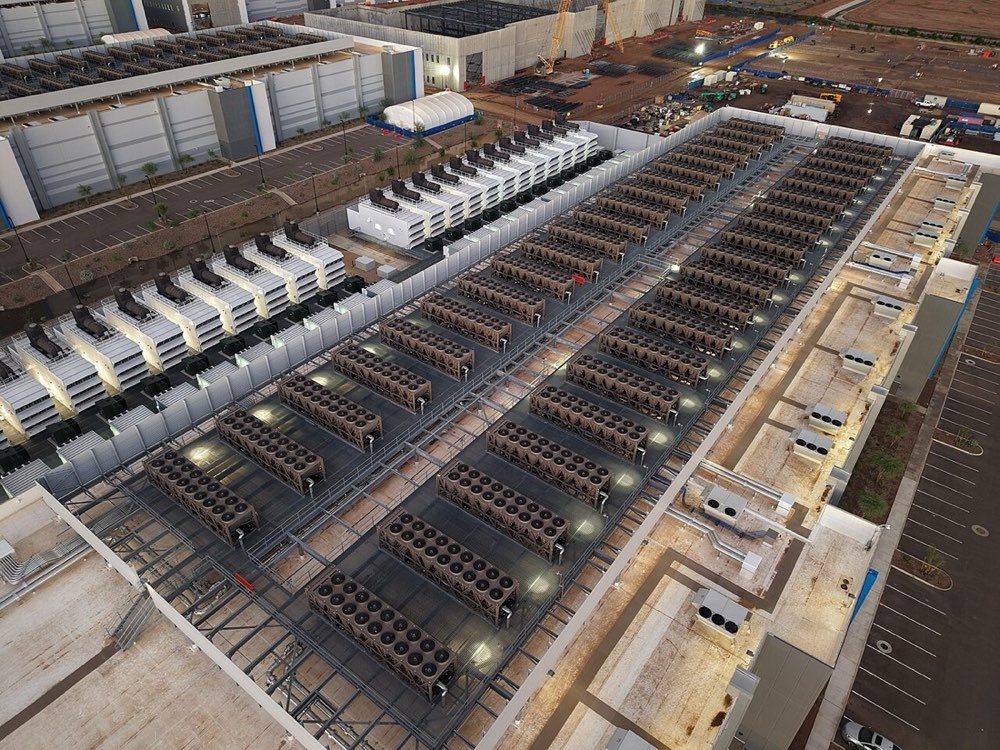
Liquid cooling addresses that directly, and it has a second benefit that matters to the people paying the electricity bill. Better heat removal improves power usage effectiveness, meaning more of the energy drawn by a site goes into computation rather than into keeping it cool, which is the metric operators are judged on.
Why power conversion is the other half
A large AI campus does not simply plug in. Flex cited the shift towards next generation 800V data centre power architectures as part of its rationale, which is the industry moving to higher voltage distribution to carry more power with lower losses.
Then there is the grid itself. Grid-forming power conversion equipment is what allows very large, very variable loads to connect to electricity systems that were not designed for them, and that is increasingly the gating factor on new capacity, a constraint our AI's building spree piece examines.
The structure of the Flex deal is its own signal. Flex plans to separate its Cloud and Power Infrastructure segment into an independent listed company in the first quarter of 2027, which is what a company does when it believes the market will value a business more highly on its own than inside a conglomerate.
The India read-through
India is building the same thing, with the same shopping list. The domestic data centre expansion covered in our India data centre boom piece requires cooling systems, power conversion equipment, transformers and switchgear from the same global supply base that hyperscalers are now buying into.
That cuts two ways, and which way depends on which side of the trade a company sits. Indian manufacturers of electrical and cooling equipment face a demand environment they have not seen before. Indian data centre developers face longer lead times and firmer prices for the same gear.
There is a third group worth naming honestly. Indian IT services companies are adjacent to this build rather than inside it, since they sell software and services to the enterprises using AI, not the hardware that hosts it, a distinction our AI stocks India piece sets out.
What investors should watch
The first is whether these deals close on schedule. Both are expected to complete in the fourth quarter of 2026, and large infrastructure acquisitions announced during a capex boom occasionally get repriced if financing conditions change, which is not a trivial risk with the US 10-year near its highest since 2007.
The second is order backlogs rather than deal headlines. Acquisitions tell you where capital thinks demand is going. Backlogs and lead times tell you whether it has arrived, and the two can diverge for several quarters.
The third is electricity, which is the real ceiling. A site that cannot get a grid connection cannot host anything regardless of how good its cooling is, and power availability has become the binding constraint on AI capacity in several markets.
The fourth is the funding behind the build. Oracle's fiscal 2026 free cash flow was negative $23.7 billion as capital expenditure absorbed record operating cash flow, covered in our Oracle AI backlog piece, and the cooling and power suppliers are ultimately paid out of that same spending.
Risks to monitor
The second risk is competition. Attractive economics attract entrants, and cooling and power conversion are engineering-led rather than patent-protected in most segments, so today's pricing power is not guaranteed to persist through a build-out this large.
The third is concentration. A supplier whose growth depends on a handful of hyperscaler programmes carries the credit and scheduling risk of those customers, which is a different risk profile from a diversified industrial. This is general information, not investment advice.
The pattern is familiar from every infrastructure cycle: the first money goes into the thing everyone can name, and the later money goes into whatever turns out to be scarce. In this cycle the scarce things appear to be electricity and the ability to get rid of heat.