The biggest constraint on the artificial intelligence boom is no longer chips, talent, or even money. It is electricity. The five largest hyperscalers plan to spend nearly $690 billion on infrastructure in 2026, almost all of it on AI, yet the real bottleneck has shifted from whether customers want the capacity to whether the power grid can deliver enough electricity to run it. The AI build-out has run headlong into a power wall.
This is a striking turn. For two years the question was demand, whether businesses would actually pay for AI. That question has been answered emphatically, and a new one has taken its place: where will all the power come from. It is a problem of physics and infrastructure, not marketing.
What Happened
The spending numbers are without precedent. Amazon plans around $200 billion, Alphabet $175 to $185 billion, Meta $115 to $135 billion, Microsoft $120 billion or more, and Oracle $50 billion, for a combined hyperscaler total near $690 billion in 2026. Counting the wider industry, global data centre capex is estimated at around $726 billion. The vast majority is aimed at AI compute, the data centres that house it, and the networking that connects it.
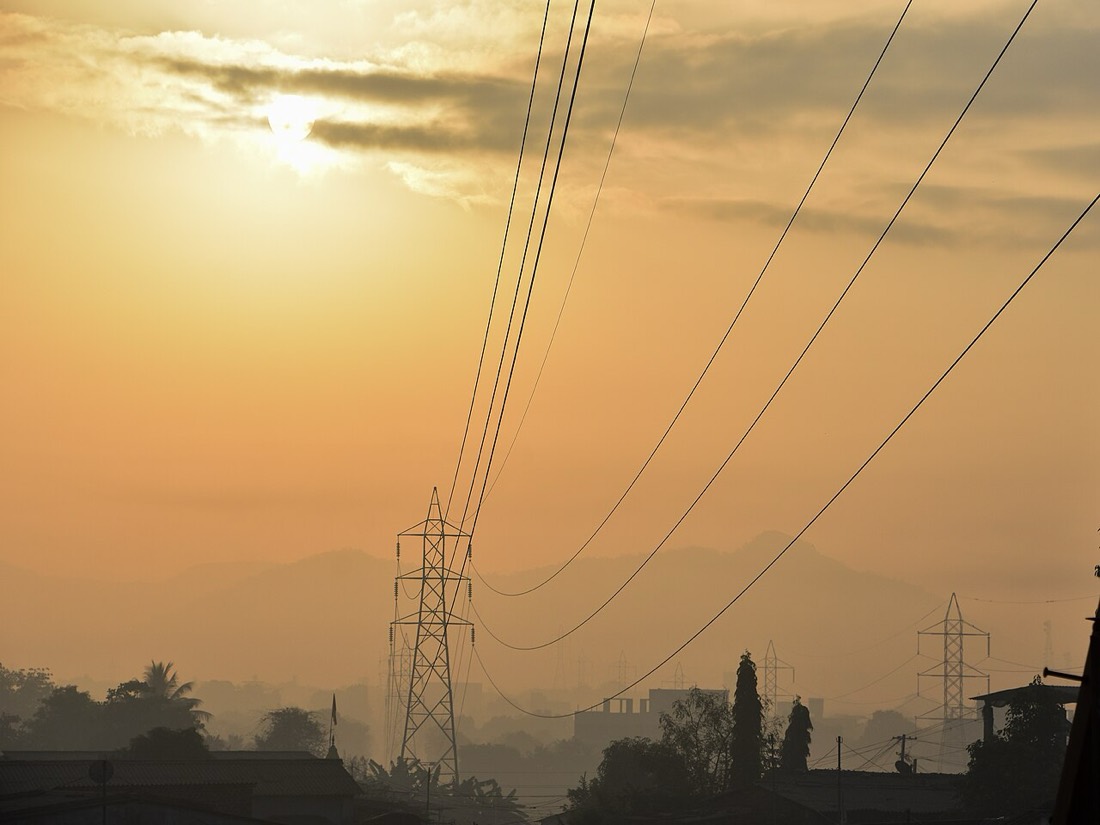
The money has started moving down the stack. Blackstone agreed to buy a data centre liquid cooling components maker on 10 September 2026 and Flex agreed to pay about $4.4 billion for power conversion specialist EPC Power, deals our AI cooling and power piece unpacks.
Oracle is the single sharpest example of the funding gap, with capital expenditure of $55.7 billion in one quarter and about $70 billion guided for FY2027, covered in our Oracle AI backlog analysis.
The constraint became visible in an unusual place. Microsoft has described an $80 billion Azure backlog driven largely by power availability rather than weak demand, meaning customers are ready to buy capacity that cannot be switched on because the electricity to run it is not yet connected. When a company that size cannot meet orders for lack of power, the bottleneck is structural.
The electricity figures explain why. US data centre power demand is projected to reach about 76 gigawatts by 2026, up from roughly 50 gigawatts in 2024. Data centres consumed around 176 terawatt-hours in the US in 2023, about 4.4 percent of national electricity, with projections reaching as high as 12 percent of the grid by 2028. Global data centre electricity use is expected to roughly double between 2022 and 2026, a pace that grids were never designed to absorb.
Why This Matters for Investors
The power bottleneck reshapes who benefits from the AI boom. The trade is broadening beyond chipmakers to the companies that supply power, cooling, grid equipment, and construction, because the scarce resource is now electricity and the ability to deliver it. Utilities, energy producers, transformer makers, and cooling specialists have become part of the AI investment story in a way they were not before.
It also raises the stakes on the AI bubble debate. Nearly $690 billion of annual spending assumes that AI will eventually generate enough revenue to justify it, and the spending flows straight into the earnings of listed companies like Nvidia, which reached a $5.2 trillion valuation in 2026. If AI returns disappoint, this capex is the first thing that gets cut, and a huge web of suppliers would feel it. The spending is both the fuel for the rally and the source of its biggest risk.
For India, the boom is an opportunity and a challenge at once. The country is becoming a fast-growing data centre market, with Anant Raj, Adani, and global players investing to host AI and cloud workloads. That creates demand for power, land, and cooling. But it also tests whether India's grid can support large new data centre loads, the same question now confronting every major market, and it ties India's electronics and power sectors into the global AI story.
Market Reaction
The scale of planned capex has underpinned confidence in the AI trade through 2026, supporting the valuations of chipmakers, cloud providers, and now power-linked companies. Investors have increasingly treated electricity as the next chokepoint to bet on, rotating attention toward utilities and energy infrastructure as the power constraint became clear.
At the same time, the sheer size of the spending has fed unease. The same numbers that excite bulls worry sceptics, who note that no industry has ever spent at this rate on a technology whose ultimate profitability is still being proven. The market is holding both views at once, rewarding the build-out while debating whether it will pay off.
What Investors Should Watch
The first thing to watch is whether the capex plans hold or get trimmed. Any signal that a major hyperscaler is slowing its spending would ripple through the entire AI supply chain, from chips to construction, so the quarterly capex guidance from Amazon, Microsoft, Alphabet, and Meta is the key data to track.
The second is the power situation itself. New grid connections, power purchase deals, and investments in generation, including nuclear and renewables, will reveal whether the electricity bottleneck is easing or tightening. The pace of power delivery effectively caps how fast the AI build-out can proceed.
The third is evidence of AI returns. The whole edifice rests on AI eventually earning enough to justify the spending, so signs that businesses are paying real money for AI productivity, rather than just experimenting, are what would turn the bubble fear into a sustainable boom.
Risks to Monitor
The central risk is that AI revenue never catches up to the spending. If the productivity gains prove smaller or slower than hoped, the nearly $690 billion in annual capex would be exposed as overbuilding, and the cuts would cascade through every dependent industry. Capex this large has little tolerance for disappointment.
A second risk is the power constraint itself becoming a hard ceiling. If grids simply cannot supply enough electricity, the AI build-out stalls regardless of demand or money, limiting the growth the market has priced in. Energy, not ambition, would set the pace.
There is also an environmental and political risk. Data centres competing with homes and industry for power can drive up electricity prices and draw regulatory scrutiny, which could raise costs or slow new projects in many regions, including parts of India.
The AI era was supposed to be a contest of algorithms and chips. Instead, in 2026, it has become a contest for electricity, and the companies, countries, and grids that can deliver power at scale will shape who wins. The $690 billion is being spent on the assumption that the power, and the payoff, will both arrive.