A crash does its real damage in your head, not in your portfolio. When the market plunges, as the Sensex did when it crashed 1,677 points on July 8, 2026, the fall itself is only a paper loss, and it becomes a permanent one only if fear pushes you to sell at the bottom. How you behave in the next few days matters far more than the size of the drop.
The hard truth is that crashes are a normal, recurring feature of investing, not a freak event. Knowing that in advance is what lets you act calmly when one arrives.
First, do nothing hasty
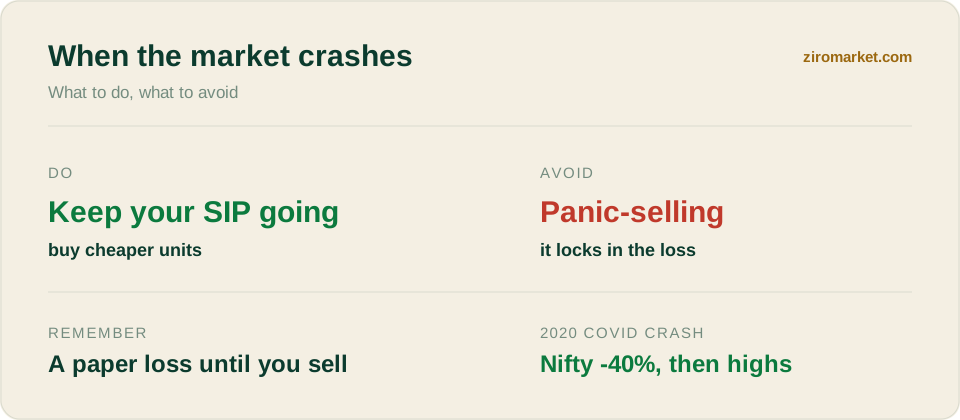
The instinct to "just get out" is the one to resist hardest. Selling during a crash locks in the loss and usually means missing the recovery, since markets tend to rebound fastest right after the sharpest falls. Investors who sold at the bottom of the 2020 Covid crash, when the Nifty was down nearly 40%, crystallised huge losses just before one of the strongest rallies in Indian market history.
This does not mean freezing forever. It means not making an irreversible decision in a moment of fear. If you had a sensible plan before the crash, a diversified portfolio you can hold for years, the crash itself is not a reason to abandon it. The plan was built for exactly this.
Keep the habits that work
The single most powerful thing most investors can do in a downturn is boringly simple: keep their SIP running. A Systematic Investment Plan buys more units when prices are low, so a crash is when it does its best work through rupee cost averaging, the same logic covered in our guide on how to start investing in stocks. Stopping a SIP in a crash is like cancelling a sale because the shop lowered its prices.
For those with spare cash and a long horizon, a crash can be a chance to add to quality holdings at cheaper prices, ideally staggered rather than all at once, since no one can reliably call the bottom. The key word is quality: a crash is a time to own strong, diversified assets, not to gamble on beaten-down speculative names hoping for a bounce.
Understand why it fell
Not all crashes are equal, and knowing the cause helps you judge how worried to be. A crash driven by an external shock, like the US-Iran conflict and oil spike behind the July 2026 fall, is usually different from one caused by a genuine collapse in company earnings. The first is often temporary and fear-driven, as our stock market crash today analysis explains, while the second can take longer to heal.
The market's own fear gauge helps here too. A sharp jump in the India VIX, as happened during this crash, tells you volatility is high and swings will be large, but it does not tell you the market is doomed. Reading the cause and the context stops you from treating every red day as the start of the end.
Zoom out
The most useful thing in a crash is a longer lens. Here is how the Nifty 50's three deepest recent falls played out.

None of this means crashes are painless or that every stock recovers, and money you will need within a year or two should never be in equities in the first place. But for the long-term wealth most people are building for retirement or a distant goal, the right response to a crash is usually the hardest one: stay calm, stick to the plan, keep investing, and let time do the work that panic would undo.