The hardest part of investing is not the money, it is starting without tripping over your own feet. You can begin in India with a PAN card, a bank account, a demat account and as little as Rs 5,000, and the smartest first move is almost never a single stock, it is a low-cost Nifty 50 index fund or ETF that owns 50 large companies at once. Get the boring foundations right and time does most of the work.
Here is the sequence that keeps a beginner out of trouble, what it actually costs, and what a small monthly habit can turn into.
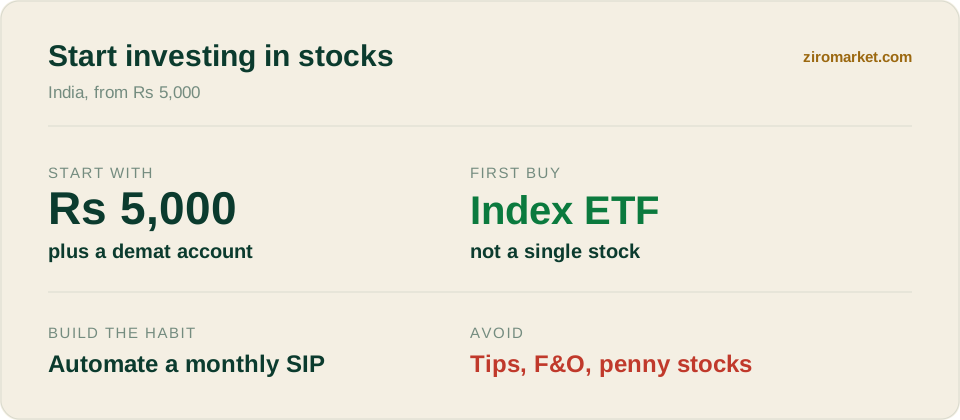
What do you need before your first rupee goes in?
You need a PAN card, a bank account in your name, an Aadhaar-linked mobile number for online KYC, and a demat-plus-trading account with a broker registered with the Securities and Exchange Board of India (SEBI). A demat account is the locker that holds your shares; the trading account is the counter where you place orders, and most brokers open both together online in a day or two. India had 231.5 million demat accounts by June 2026, so the process is well worn, as our demat accounts tracker shows.

One step comes before the account. Keep three to six months of expenses in a savings account or fixed deposit before buying any equity, because money you might need within three years should not be exposed to a market that can fall 15% in three months. The Nifty 50 did exactly that between January and April 2026.
The five-step start
You do not need to understand everything before you begin. You need enough to take the first correct step and avoid the expensive early mistakes.
The order matters more than the amounts, because a beginner who starts broad and automatic builds the habit that compounds, while one who starts by chasing a tip usually quits after the first loss.
What does it actually cost to start?
Less than most people assume, as long as you avoid regular plans and frequent trading. A Nifty 50 index fund in a direct plan charges roughly 0.06% to 0.20% a year (as of 2026), which works out to about Rs 36 to Rs 120 a year on Rs 60,000 invested.
The fee that quietly hurts beginners is not brokerage, it is the regular-plan commission, which can add close to a percentage point a year to a fund's cost. Always pick the direct plan of a mutual fund.
Why index funds come first
Picking the one company that will beat the market is hard even for professionals. Buying a Nifty 50 index fund means you own a slice of Reliance, HDFC Bank, ICICI Bank, Infosys, TCS and 45 other large companies in a single purchase, so no single business can sink your portfolio.
The long record is the argument. The Nifty 50 Total Return Index, which counts reinvested dividends, returned about 12.4% a year over the 20 years to February 2026, and that period included the 2008 crash, the 2020 pandemic fall and plenty of years that felt hopeless at the time. Once you can read a company, using our guides to how to read a balance sheet and what is PE ratio, you can add individual names with more confidence.
What can Rs 5,000 a month become?
A SIP, or Systematic Investment Plan, automates a fixed monthly investment. It works because it forces you to keep buying through market falls, when prices are low and fear is high, averaging your cost and taking emotion out of the decision. The numbers below are arithmetic on assumed returns, not a forecast.
Most of the money in the 20-year row comes from the last seven or eight years, which is why stopping a SIP during a bad year is the most expensive decision a beginner can make. Our SIP vs lumpsum explainer covers when a one-time investment does better.
How are your gains taxed?
Tax is simpler than it looks. Sell listed shares or equity funds within 12 months and the gain is taxed at 20%; hold longer and long-term gains above Rs 1.25 lakh in a financial year are taxed at 12.5%. Our capital gains tax guide works through examples.
The through-line is patience. The Rs 5,000 you begin with matters far less than whether you are still investing, calmly, five years from now, through at least one year like 2026. If you would rather start with funds than pick stocks, our how to choose a mutual fund in India guide walks through it in five steps.