For years, the smart-money answer to "how should I buy gold" was simple: Sovereign Gold Bonds. That answer has expired. No new Sovereign Gold Bond has been sold since February 2024, and Budget 2026 took away the tax-free exit for anyone who buys old bonds on the exchange, so gold ETFs are now the default way to own gold on paper, gold mutual funds cover investors without a demat account, and digital gold is a small-ticket convenience with real caveats. The menu shrank, so knowing the trade-offs matters more than ever.
Each route buys you the same metal but a very different experience on cost, tax, liquidity and safety. Here is how they stack up in September 2026.
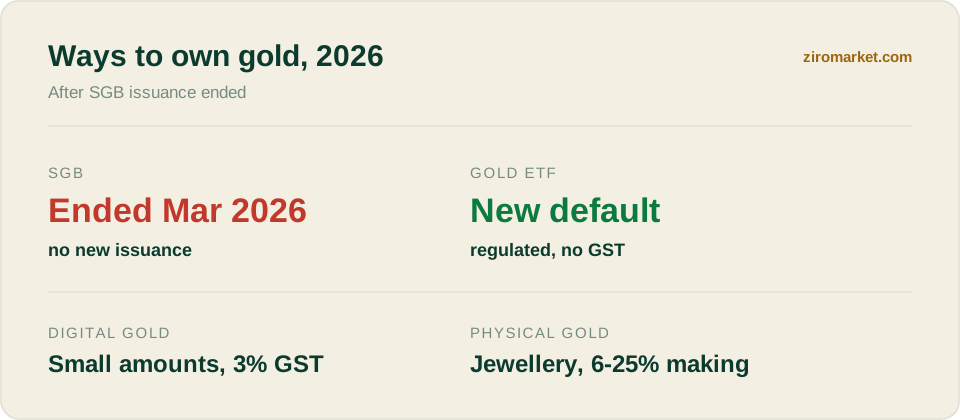
How do the five routes compare?
The standout loss is the SGB, which combined zero cost, a 2.5% coupon and tax-free gains at maturity, a package nothing else matches. The last tranche, SGB 2023-24 Series IV, was priced at Rs 6,263 a gram in February 2024, and the Reserve Bank of India set early-redemption prices of Rs 15,440 a gram in February 2026 and Rs 15,512 in June, which shows why the scheme became expensive for the government.

What did Budget 2026 change for existing SGBs?
It split holders into two groups. From 1 April 2026, capital gains on an SGB are tax-free only if you subscribed at the original issue and hold until the eight-year maturity; anyone who bought on the exchange, and anyone who exits through an early-redemption window, now pays capital gains tax. The 2.5% interest was always taxable at your slab rate and still is.
That changes the maths on a popular trick. Buying old SGBs on the exchange at a discount to gold used to be a way to lock in tax-free gains; after Budget 2026, that discount has to be weighed against a 12.5% tax on the eventual gain. Original subscribers lose nothing if they simply hold to maturity.
Why gold ETFs won the default slot
With SGBs closed, gold ETFs are the natural replacement for investors who want gold exposure without the hassles of metal. They carry no GST at purchase, trade on the exchange at live prices, hold physical gold with a custodian, and are regulated by SEBI, which removes the counterparty worry that hangs over digital gold. For anyone already investing through a demat account, adding one is a two-minute job.
The tax treatment is the one catch. A gold ETF held beyond 12 months is taxed at 12.5% without indexation, and it does not get the Rs 1.25 lakh exemption that equity funds enjoy, as our capital gains tax 2026 guide explains. If you have no demat account, a gold mutual fund invests in the same ETFs and accepts SIPs from Rs 500, at the price of a slightly higher total expense ratio.
Where do digital and physical gold still fit?
Digital gold has one real strength: you can start with Rs 100 in an app. SEBI's November 2025 advisory made the weakness explicit: digital gold is neither a security nor a commodity derivative, so none of the securities market's investor protections apply if the platform or vault operator fails. Add 3% GST and a buy-sell spread, and it suits small gifts and habit-building rather than serious savings.

Physical gold is honest about what it is for. Making charges, storage worries and purity risk make coins and jewellery inefficient as an investment, but they remain the right choice for weddings, festivals and the cultural role gold plays in Indian homes. Our gold vs silver in 2026 comparison and how to invest in gold in India guide go further on each route.
The gold question in 2026 is no longer "which is best overall" but "which fits this rupee." A large, long-term allocation leans to ETFs, a monthly habit without a demat account to a gold fund, a wedding purchase to physical, and an old SGB you subscribed to at issue to the one thing it now rewards: patience until maturity.