India is rewriting its place in the global arms business, shifting from one of the world's largest weapons buyers toward a country that builds and exports its own. Hindustan Aeronautics sits on an order book of about Rs 2.55 lakh crore and Bharat Electronics on Rs 72,258 crore, as India's defence sector targets Rs 1.75 lakh crore in production and Rs 30,000 crore in exports. Those backlogs are the engine behind one of the strongest sectoral runs in the Indian market.
The story is part industrial policy and part geopolitics. A government determined to manufacture arms at home has handed domestic companies years of guaranteed work, while rising global tensions have lifted demand for everything they make. For investors, the appeal is simple: confirmed orders mean visible revenue.
Update, 9 September 2026: India's Defence Acquisition Council cleared fresh procurement proposals worth about Rs 1.10 lakh crore ($11.64 billion) on 7 September 2026, with roughly 98% to be sourced from Indian companies, and the BSE India Defence Index rose as much as 2.1% the next day. HAL's order book stood at about Rs 2.54 lakh crore as of March 2026 and BEL's at Rs 73,882 crore as of 1 April 2026. The detail is in our DAC approval piece.
What Happened
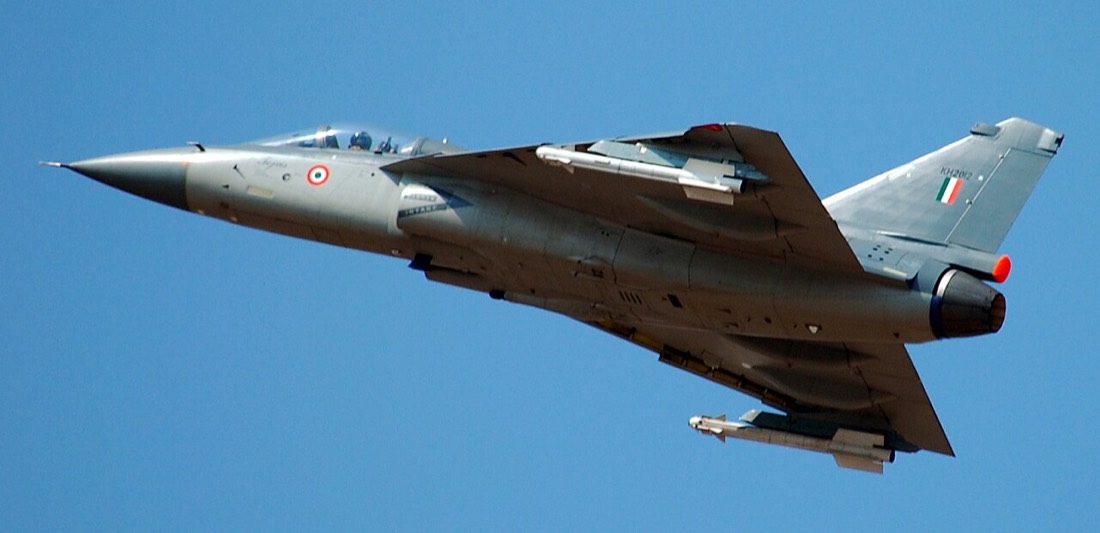
HAL, India's largest defence public sector company, anchors the story. Its Rs 2,54,538 crore order book, as of 31 March 2026, includes Tejas Mark 1A contracts for 180 jets worth about Rs 1.1 lakh crore and Rs 62,700 crore for 156 Prachand helicopters, alongside Advanced Light Helicopters and Dornier aircraft. That backlog cements HAL's dominance in Indian fighter jets and helicopters and gives it years of forward revenue.
BEL has built its own record. The company held an order book of Rs 72,258 crore on 1 July 2026 across radars, electronic warfare, and battlefield management systems, the electronic backbone of modern defence. BEL is also pushing exports into Africa, the Middle East, and ASEAN markets, widening its runway beyond home orders.
The sector picture matches the company stories. India's defence production turnover is on track to reach about Rs 1.75 lakh crore by the end of FY2025-26, with exports scaling toward a Rs 30,000 crore target by March 2026 and a larger Rs 50,000 crore goal set for 2029. Export interest is real and widening, with countries like Egypt, Malaysia, and Argentina eyeing HAL products and BEL selling into several emerging markets.
Why This Matters for Investors
Order books are the heart of the defence investment case because they convert into predictable revenue. A multi-year backlog worth tens of thousands of crores gives these companies visibility that few other sectors can match, which is precisely what markets pay a premium for. When a company knows what it will build for the next several years, its earnings become far easier to forecast.
The structural tailwinds reinforce the case. India's drive for self-reliance in defence, known as the push to manufacture at home rather than import, channels government spending toward domestic firms. Rising defence budgets and a deliberate policy to favour Indian suppliers turn government strategy directly into corporate revenue. The 2026 geopolitical backdrop, including the Iran conflict, has only sharpened the focus on military readiness.
Exports add a second growth leg. For decades India was a net importer of arms, so every rupee of defence export is new territory. As HAL, BEL, and others win foreign orders, they reduce their dependence on the domestic budget cycle and tap a far larger global market, which expands the long-term opportunity well beyond India's borders.
Market Reaction
Defence stocks have been among the standout performers in the Indian market, with the sector rerated sharply higher as investors priced in the order books and policy support. The combination of guaranteed revenue and a national priority has made defence one of the market's favoured themes. HAL and BEL, as the largest and most liquid names, have led the move.
That enthusiasm has a flip side. The strong run has pushed valuations in parts of the sector to demanding levels, where a great deal of future growth is already reflected in the price. The market is treating these companies as structural winners, which raises the bar for them to keep beating expectations.
What Investors Should Watch
The first thing to watch is order execution. A large backlog only helps if companies can actually build and deliver on time, so production milestones, especially on the Tejas Mark 1A programme, are the real test of whether the order book turns into profit.
The second is the pace of exports. The Rs 30,000 crore near-term target and the Rs 50,000 crore 2029 goal are ambitious, and steady progress toward them would validate the growth story while a stall would dent it. New foreign orders from countries like Egypt or Argentina are the signals to watch.
The third is valuation discipline. After a powerful rerating, the risk shifts from the business to the price paid for it, so investors should weigh whether current valuations leave room for further gains or already assume years of flawless delivery.
Risks to Monitor
The clearest risk is execution delay. Defence programmes are complex and have a long history of slipping timelines, and any major delay on a flagship order like the Tejas would push out revenue and disappoint a market that has priced in smooth delivery. Execution, not demand, is the sector's biggest uncertainty.
A second risk is budget dependence. Despite growing exports, these companies still rely heavily on government orders, so any squeeze on the defence budget from fiscal pressures, perhaps from a weak monsoon or an oil shock, would hit their pipeline.
Valuation is the third risk. After such a strong run, the stocks carry high expectations, and any earnings miss or order slippage could trigger a sharp correction from elevated levels.
India's defence champions are enjoying a rare moment where national strategy, geopolitics, and market enthusiasm all point the same way. The order books are real and the export ambition is genuine, but the next chapter depends on turning those confirmed contracts into delivered aircraft, radars, and profits.