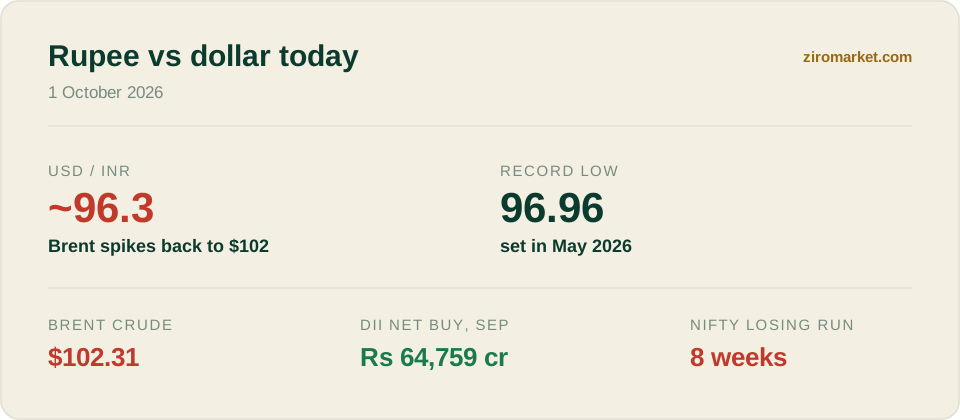
The rupee's brief breathing room did not survive the first trading day of October. The rupee weakened to about 96.3 per US dollar on 1 October 2026, down roughly 0.56% on the day from about 95.92 on 30 September, as Brent crude's jump back to $102.31 erased the relief it had drawn from oil's late-September fall.
The reversal is a reminder of how little cushion the rupee has. Oil easing in late September had been the one force working in the currency's favour, and a single day's spike on a geopolitical report was enough to undo most of that relief, while a hawkish Federal Reserve and a historically bad run for Indian equities keep pulling the other way regardless of oil.
Why did the rupee weaken again?
Oil reversed course. India imports more than 90% of the crude it uses, so Brent jumping from about $97 back to $102.31 on reports of a third US carrier heading to the Middle East and China halting fuel exports immediately raises the dollar bill India must fund, a transmission our third US carrier and oil spike piece and crude oil price today page both track.
The other two pressures never actually eased. The Federal Reserve's 16 September rate rise to 3.75 to 4.00% keeps US assets attractive to foreign capital, as our US CPI August 2026 piece explains. And Indian equities extended their losing run on 1 October, with the Nifty 50 falling 0.88%, covered in our Indian stock market today wrap, keeping foreign portfolio pressure alive even as DIIs keep absorbing most of the selling.
How is the RBI defending it?
Not primarily with rates, with reserves and swaps. The Reserve Bank of India has drawn $136.37 billion through its FCNR(B) swap window and has stepped in with direct dollar sales at points through September, a mechanism our FCNR swap piece explains. India's foreign exchange reserves stood close to $780 billion in the most recently published week.
That firepower is why the rupee has moved in an orderly band rather than gapping sharply lower even on a day when oil jumped more than 4%.
What a weaker rupee does to you
The cruel part of an oil-driven depreciation is that it raises prices at exactly the moment the central bank would otherwise want to support growth.
What to watch
The first is whether the carrier build-up near Iran is posture or a prelude to strikes. A confirmed de-escalation would do more for the rupee than any amount of intervention, because it shrinks the dollar bill at source rather than financing it.
The second is the US sanctions law signed on 18 September 2026, which authorises tariffs of up to 100% on the largest buyers of Russian energy and names India among them, with a 30-day window closing around 18 October. A tariff would hit exports and the currency at the same time.
The third is the Reserve Bank of India's 7 October policy decision, after August CPI rose to 4.82% and oil has now spiked again, which decides whether the repo rate stays at 5.25% for longer.
The fourth is the record low at 96.96. At about 96.3, the rupee is closer to that level than it has been in weeks, and a break below it would draw headlines and can accelerate corporate hedging, which in turn accelerates the move.
Risks to monitor
The second risk is the feedback loop. A weaker rupee raises imported inflation, which raises the cost of the RBI holding rates, which further discourages foreign inflows.
The third is the upside case. A confirmed de-escalation near Iran and a strong Q2 FY27 earnings season, starting with TCS on 8 October, could both firm the rupee at once. This is general information, not investment advice.
The rupee spent September being pulled by oil, rates and equities all at once, found a few days of calm as oil eased, and lost most of that calm in a single session once a new geopolitical report arrived. October is starting exactly where the pressure left off.