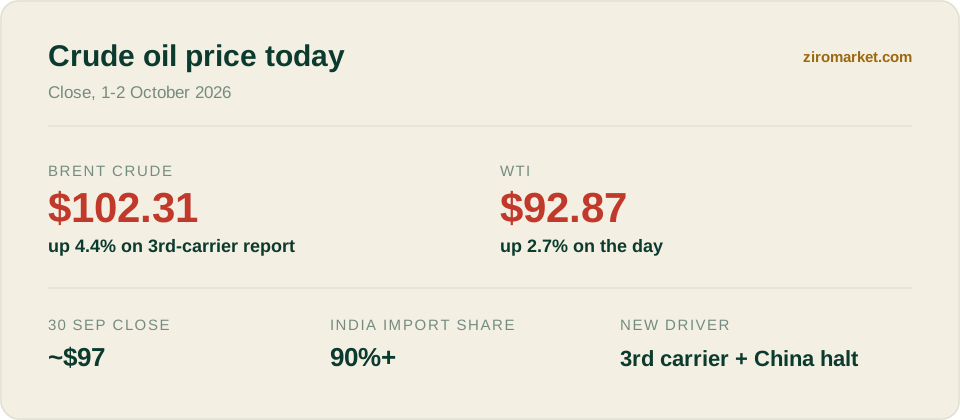
The relief lasted barely two trading days. Brent crude jumped 4.4% to close at $102.31 a barrel on 1 October 2026 and held near $102.15 on 2 October, erasing September's late-month fall to about $97, after US officials said a third aircraft carrier strike group is heading toward the Middle East and major Chinese refiners suspended most fuel exports for October. US WTI climbed 2.7% to $92.87.
Two unrelated shocks landed on the same day. US officials told reporters the USS Theodore Roosevelt, which left San Diego on 27 September, will reach the Middle East by late November along with up to 10,000 additional troops, which would put three American carrier strike groups in the region at once, a build-up several outlets read as preparation for a wider campaign against Iran. Separately, Chinese refiners including PetroChina suspended most October fuel cargoes to rebuild domestic stocks, pulling diesel, gasoline and jet fuel out of an already strained global market.
For an economy whose crude import dependence crossed 90% in FY26, the reversal is a reminder that September's workaround around the Strait of Hormuz fixed a shipping logistics problem, not the underlying conflict.
Why did oil reverse so fast?
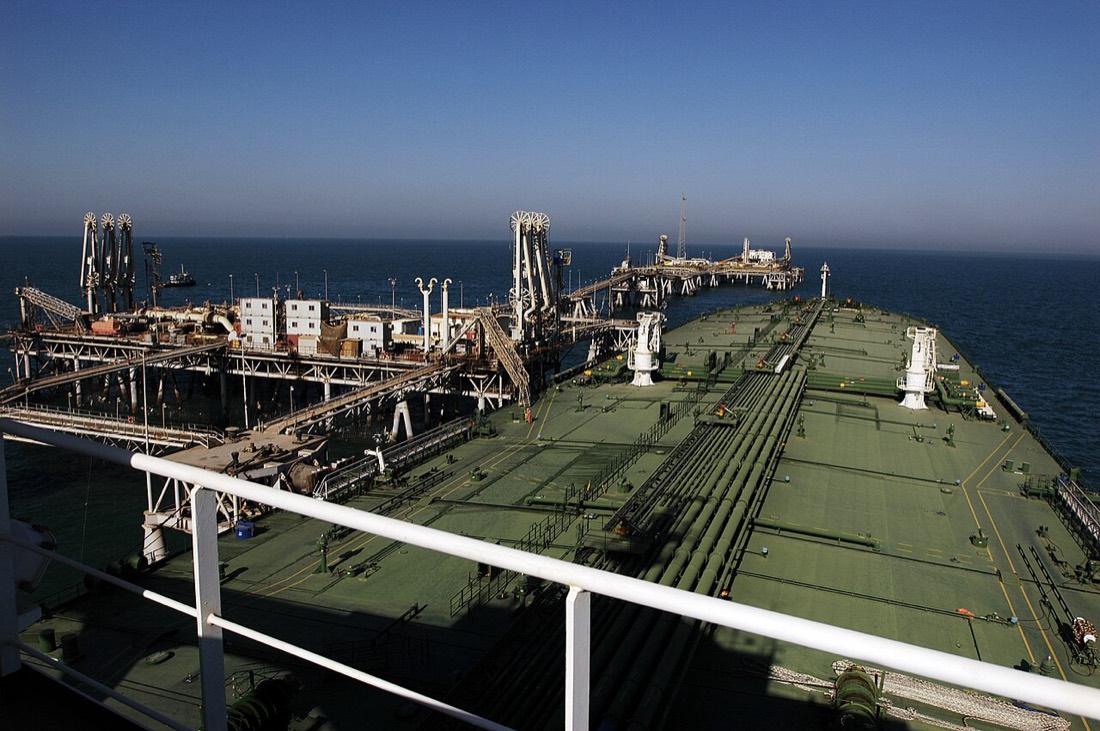
Because the September fall was a workaround, not a resolution. Saudi Arabia's ship-to-ship transfers around the Strait of Hormuz had let exports recover to about 16.3 million barrels a day in September, but that fix did nothing to address the underlying US-Iran standoff, so a fresh sign of escalation was always capable of reversing it in a single session.
The carrier build-up is the larger signal. The USS George HW Bush and USS George Washington are already in the region, and the Roosevelt's arrival by late November would bring a third strike group in at once, alongside thousands more Marines and other personnel. Markets read troop and carrier movements as a leading indicator of intent, which is why the report moved Brent more than most routine data releases do, a build-up our third US carrier and oil spike piece covers in full.
The China side is a separate, quieter shock. Kpler estimates China's commercial diesel and gasoline inventories had fallen tens of millions of barrels below the levels Beijing wants before allowing exports to resume, and the suspension lands on top of Middle East disruptions and Ukrainian strikes on Russian refineries that were already squeezing global diesel supply.
What it means for India
The transmission is immediate. Every sustained $10 on the barrel is worth an estimated 20 to 30 basis points of India's GDP growth, and a jump back to $102 lands four days before the Reserve Bank of India's 7 October rate decision, complicating a meeting that had been expected to note some relief from oil.
Indian equities already felt it. The Nifty 50 fell 0.88% to 22,421.95 and the Sensex 0.79% to 71,909.70 on 1 October, extending a losing run that multiple market reports now describe as eight straight weekly declines, the longest in 25 years, as our Indian stock market today wrap covers.
What to watch
The first is whether the carrier deployment is posture or a prelude. Three strike groups in one region is an unusual concentration, and how the US and Iran talk about it in the next week will matter more than the ships themselves.
The second is when China resumes exports. Beijing's National Day holiday runs to 7 October, and refiners could restart shipments once domestic stocks and the holiday both clear, which would remove one leg of this week's spike.
The third is the 30-day window under the Russia sanctions law, which closes around 18 October. Applying tariffs to India or China would be a separate inflation event layered on top of whatever oil is doing by then, as our Russia sanctions and India piece explains.
Risks to monitor
The second risk is the one India always carries. A sustained move above $100 widens the import bill and pressures the rupee regardless of why oil is high, whether the cause is a blocked strait, a halted export programme, or a carrier that never fires a shot.
The third is policy collision. The RBI's 7 October decision, the US tariff deadline around 18 October, and whatever the carrier build-up produces could all land inside the same three weeks, stacking risks that are each manageable alone but harder to absorb together. This is general information, not investment advice.
Brent spent four months climbing to $109, falling to $97, and is now back above $102 inside a single week of October. The lesson of the quarter is not which direction oil is moving, it is how little margin there is before the next headline moves it again.