Elon Musk has done many things first, but on June 12, 2026, he did the biggest: he took SpaceX public in the largest IPO the world has ever seen. SpaceX began trading on the Nasdaq under the ticker SPCX, selling 555.56 million shares at $135 each to raise approximately $74 billion at a valuation of roughly $1.77 trillion, eclipsing every prior listing in history, including Saudi Aramco's 2019 debut. The stock closed its first day about 19% above the offer price, instantly making SpaceX one of the most valuable public companies on earth and adding hundreds of billions to Musk's net worth.
For two decades, SpaceX was the most coveted private company in the world, accessible only to venture capitalists, sovereign wealth funds, and a handful of insiders. Now it is a stock anyone with a brokerage account can own. The IPO is a landmark moment not just for Musk, but for the entire space economy, for retail investing, and, through Starlink, for internet access in markets like India.
What Happened
The road to the listing. SpaceX filed its S-1 prospectus publicly on May 20, 2026, revealing for the first time the detailed financials of a company that had operated in private for 24 years. Pricing was set on June 3, and the stock began trading on June 12 under ticker SPCX.
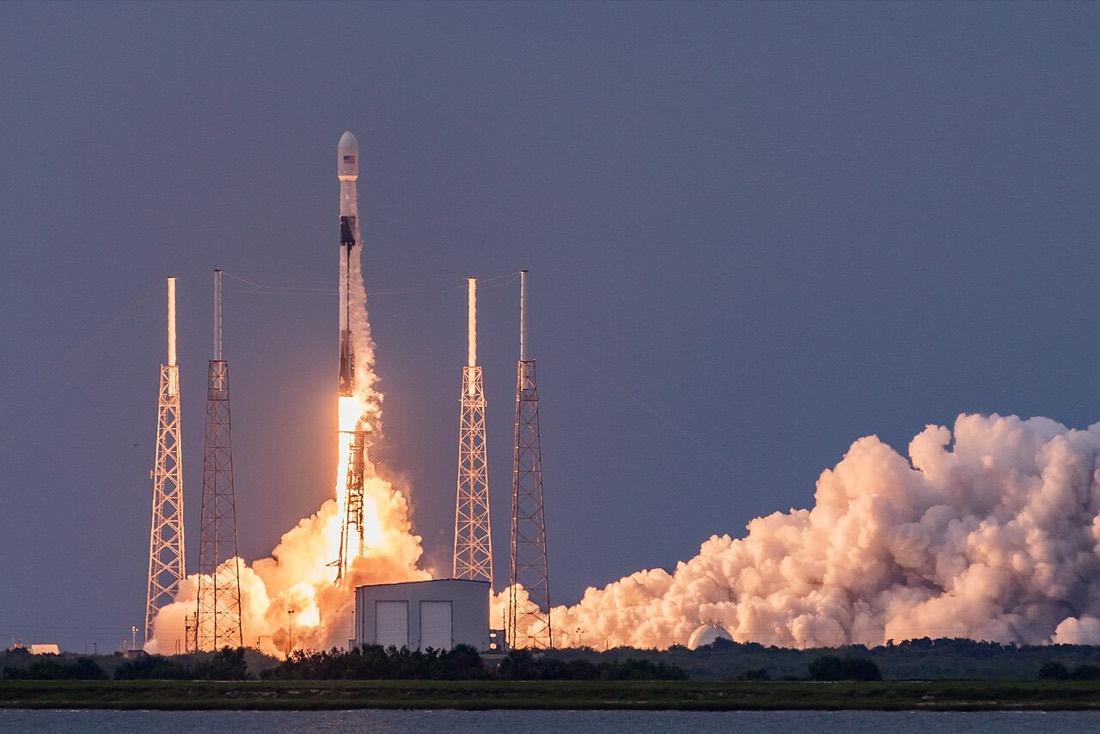
The numbers that made history:
- Shares sold: 555.56 million Class A common shares
- IPO price: $135 per share
- Capital raised: approximately $74 billion
- Valuation: roughly $1.77 trillion, the largest IPO ever
- First-day close: about 19% above the offer price
- Retail allocation: up to 30% of shares (vs. the typical 5-10%)
A company transformed by the xAI merger. In February 2026, SpaceX absorbed Musk's AI company xAI, maker of the Grok chatbot and owner of the X platform, in an all-stock deal that combined SpaceX (then valued around $1 trillion) with xAI (around $250 billion) into a $1.25 trillion entity, the largest merger of all time at the moment of announcement. The S-1 reframes SpaceX not merely as a rocket company but as an AI infrastructure and "orbital compute" business spanning launch, satellite networking, energy, and artificial intelligence. The thesis: combine Grok's AI models with Starlink's global satellite network to deliver computing power from space, bypassing the terrestrial energy bottlenecks that constrain data centres on the ground.
The two engines of revenue. SpaceX generated $18.7 billion in revenue in 2025 (up 33% from $14.1 billion in 2024) with $6.6 billion in adjusted EBITDA. The bulk comes from:
- Starlink, roughly 58% of revenue, around 10 million subscribers, $81 average monthly ARPU, approximately $9.7 billion annualised and growing fast.
- Launch services, SpaceX's reusable Falcon 9 is the workhorse of global spaceflight, carrying NASA astronauts, US military payloads, and commercial satellites at costs no competitor can match.
Starship, the long bet. SpaceX poured $3 billion into Starship research and development in 2025 alone. Starship is the fully reusable mega-rocket designed to slash launch costs below $100 per kilogram to orbit, a level at which the economics of satellites, cargo, and eventually Mars missions would be transformed. Starship is the speculative core of the valuation: it generates no revenue yet but underpins the trillion-dollar story.
Musk keeps control. As with Tesla and his other ventures, Musk retained control through a dual-class share structure, so public Class A shareholders have limited voting power. Investors are, in effect, betting on Musk's vision and judgment as much as on the business itself.
Why This Matters for Investors
SpaceX is now a public proxy for the entire space economy. Until now, investors who wanted space exposure had limited choices, Rocket Lab, smaller satellite firms, or defence contractors with space divisions. SPCX gives the market its first mega-cap, pure-play space and satellite stock. Index funds, pension funds, and retail investors can now own the dominant launch provider and the largest satellite internet network in a single ticker.
The valuation prices in the future, not the present. At $1.77 trillion against $18.7 billion of 2025 revenue, SPCX trades at roughly 95 times trailing sales, an extraordinary multiple that only makes sense if you believe Starlink keeps compounding, Starship works, and the xAI/orbital-compute thesis delivers. For context, most mature companies trade at 2-10 times sales. This is a growth-and-vision valuation, similar in spirit to how Nvidia and Tesla have been priced, the market is paying today for a future that is plausible but not guaranteed.
The 30% retail allocation is a structural shift in how mega-IPOs are done. By reserving up to 30% of shares for individual investors, SpaceX broke from the Wall Street norm of routing the best allocations to institutions. It is a signal that retail investor demand, amplified by Musk's enormous personal following, is now a force that issuers design around. Whether retail buyers who chased the 19% first-day pop are rewarded or burned will be a closely watched test case.
For Indian investors, there are two distinct angles:
-
Owning SPCX: Indian residents can buy SpaceX on the open market through the LRS route (up to $250,000 per year) using platforms like INDmoney, Vested, or Groww's US investing feature. They could not access the IPO allocation, but the stock is now freely tradable. Remember the tax treatment: US capital gains are taxable in India, and a 20% TCS applies on LRS remittances above Rs 10 lakh per year (creditable against your tax liability).
-
Starlink in India: Arguably more consequential for the Indian economy than the stock. Starlink has its IN-SPACe authorisation (valid to July 7, 2030) and licences in hand, with distribution deals signed with Reliance Jio and Bharti Airtel. If final security clearances come through, Starlink could deliver high-speed internet to rural and remote India where fibre never reached, affecting the competitive balance for Jio, Airtel, and the broader telecom sector.
Market Reaction
The 19% first-day gain confirmed extraordinary demand. A listing of this size closing well above its offer price is unusual, large IPOs often price near fair value, leaving little room for a pop. The jump signalled that even at $1.77 trillion, buyers wanted more than the offering supplied. Trading volumes in SPCX were among the highest ever for a debut.
Musk's net worth surged. With SpaceX now publicly valued and Musk holding a large controlling stake, his paper wealth jumped sharply, reinforcing his position as the world's richest person. Combined with his Tesla holdings, the SpaceX listing crystallised a substantial portion of his fortune into a publicly marked asset for the first time.
Spillover to the broader space and satellite sector. Smaller listed space companies saw renewed investor attention as SPCX validated the space economy as an investable theme at scale. The IPO also sharpened focus on Starlink's global competitors, including Amazon's Project Kuiper and India's own satellite broadband ambitions through Jio and OneWeb.
Indian telecom and satellite stocks drew investor attention on the Starlink-in-India narrative. The eventual entry of Starlink is a competitive variable for Jio and Airtel, though their distribution partnerships mean they may participate in, rather than simply be disrupted by, the satellite internet rollout.
What Investors Should Watch
Starlink subscriber and ARPU trajectory. Starlink is the cash engine that justifies much of the valuation. Watch quarterly subscriber additions (from the ~10 million base) and whether ARPU holds at ~$81 as the service expands into lower-income markets where pricing must come down. Starlink's path to consistent profitability is the single most important near-term metric.
Starship test results and cost-per-kg progress. Every Starship test flight is a referendum on the speculative half of the valuation. Reaching reliable, reusable operation at sub-$100/kg launch costs would unlock the cargo, satellite, and Mars economics the bull case depends on. Failures or delays would pressure the stock.
The xAI / orbital-compute integration. The merger reframed SpaceX as an AI infrastructure company. Watch for tangible evidence that combining Grok and Starlink produces real "compute from space" revenue, rather than remaining a slide in the prospectus. This is the newest and least-proven pillar of the story.
Starlink India final clearance. For India-focused investors, the unfreezing of Starlink's final operational approvals is the key event. It affects both SPCX's growth narrative and the competitive dynamics for Indian telecom stocks.
Risks to Monitor
Valuation risk is severe. At ~95 times sales, SPCX has priced in years of flawless execution. Any stumble, a Starship failure, Starlink growth slowdown, or AI thesis disappointment, could trigger a sharp re-rating. High-multiple stocks fall hardest when growth narratives crack, as Nvidia's June 2026 volatility and the broader 2026 market showed.
Key-person risk centres on Musk. The dual-class structure means investors are betting on Musk's continued involvement, focus, and judgment across SpaceX, Tesla, xAI, X, and his other ventures. His attention is famously divided, and his political and public activities add volatility. Any event affecting Musk personally is a direct risk to the stock.
Regulatory and geopolitical exposure. Starlink operates at the intersection of telecom regulation, national security, and geopolitics in dozens of countries. The Indian clearance freeze over Iran-conflict terminal use is one example; similar tensions could arise in any market. SpaceX's launch business also depends heavily on US government contracts, creating political concentration risk.
Competition is intensifying. Amazon's Project Kuiper, China's state-backed satellite constellations, and national satellite programmes (including India's) are all racing to claim orbital spectrum and market share. Starlink's first-mover lead is large but not unassailable.
Elon Musk's SpaceX IPO is more than a record, it is the moment the space economy became a mainstream, investable asset class, and the moment one of the world's most ambitious private companies opened its books and its shares to the public. Whether $1.77 trillion proves to be a fair price or a peak depends on questions that will take years to answer: Can Starlink keep compounding? Will Starship fly? Can compute really come from space? For now, investors, in the US and, through the LRS route, in India, finally get to vote with their money.