Book value goes by several names: shareholders' equity, net worth, net assets. They all mean the same thing. Take everything a company owns, subtract everything it owes, and what's left belongs to the shareholders. That remainder, divided by the number of shares outstanding, gives you book value per share.
The accounting equation that creates it is simple: assets minus liabilities equals equity. A company with Rs 500 crore in assets and Rs 300 crore in liabilities has a book value of Rs 200 crore. If that company has 10 crore shares outstanding, book value per share is Rs 20.
The gap between book value and share price tells you which businesses the number describes well.
Source: Screener.in, consolidated. The banks cluster between 0.7x and 1.9x book because their balance sheet is the business, while TCS and Asian Paints trade at 7x to 11x because their real assets, people and brands, never appear on it.
Book value grows when a company earns profits and retains them instead of paying them out as dividends. Every rupee of retained profit that stays in the business adds to the equity base and increases book value per share over time. This is why book value per share is sometimes used as a slow, steady measure of how much wealth a company has actually built for its owners over years or decades.
Why banks live by book value
For a bank, book value is not just an accounting entry. It is the foundation of the entire business. Banks are required by RBI regulation to maintain capital ratios relative to their risk-weighted assets. A bank with more equity (higher book value) can lend more without breaching these ratios. A growing book value means a bank can expand its loan book without raising fresh capital from shareholders.
This is why analysts track HDFC Bank's book value growth quarter by quarter. Each quarter the bank earns profits, retains a portion, and the book value per share steps up. That growing equity base supports future loan growth. An investor tracking this trajectory from 2016 to 2024 would have seen book value roughly double while the stock price increased in tandem. One caution when you compare old and new figures: HDFC Bank issued one bonus share for every share in 2025, which halved book value per share overnight to about Rs 390 without changing the bank's net worth at all.
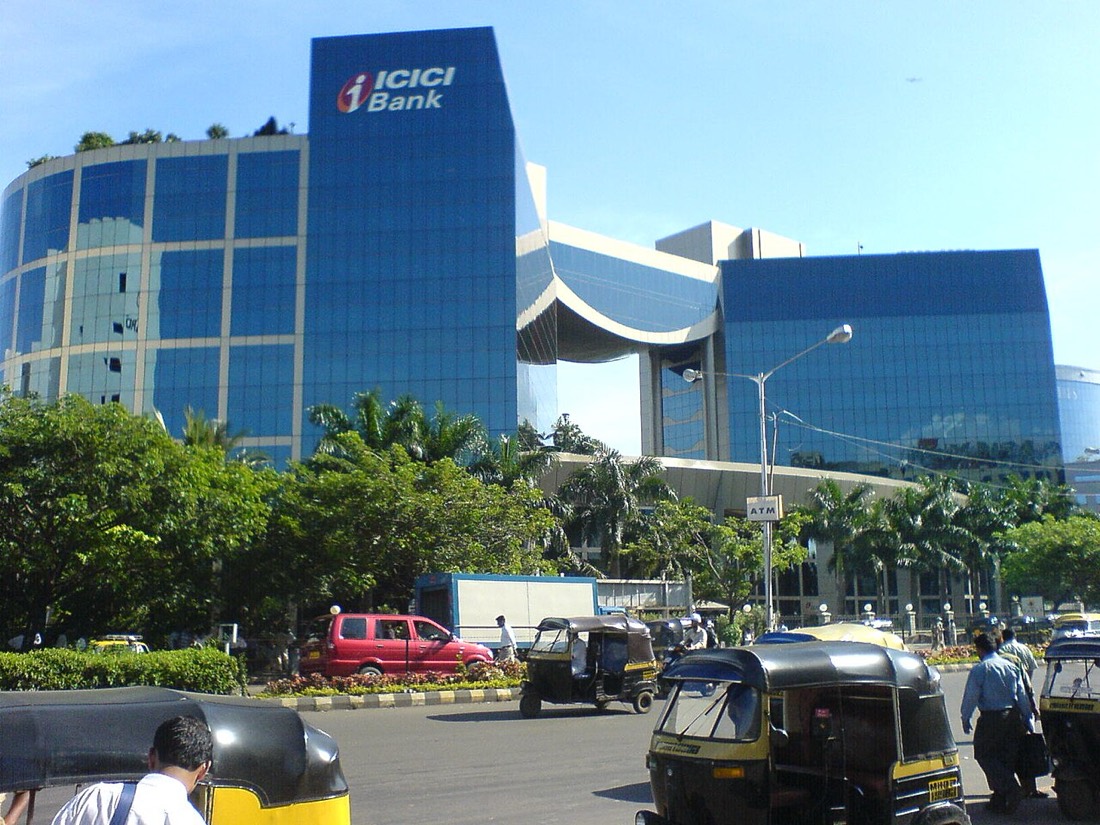
The P/B ratio, which compares market price to book value, is the standard valuation lens for banks precisely because of this relationship. When a well-run private bank trades at 2.5x book, as ICICI Bank did in September 2026, it is a statement that the market expects that book value to keep growing at above-average rates for years.
Why book value is almost irrelevant for software companies
Infosys has tens of thousands of employees, proprietary delivery frameworks, decades of client relationships, and a reputation that took thirty years to build. None of these appear on the balance sheet at anything close to their real economic value. The company's main assets are intangible, and intangibles are either not recorded at all or recorded at historical cost that bears no relationship to current worth.
Infosys's book value per share represents a fraction of its market price not because it is overvalued but because book value simply does not capture what makes Infosys valuable. The same is true for consumer brands, pharmaceutical research pipelines, and marketplace platforms. The value is in the future cash flows, not the current balance sheet.
When book value misleads
Book value uses historical cost accounting in most cases. A building bought in 1985 for Rs 2 crore might appear on the books at that cost (less depreciation) while its current market value is Rs 80 crore. The balance sheet understates reality. Conversely, inventory bought at peak commodity prices and now worth less than cost overstates it.
Goodwill is another common distortion. When a company acquires another for more than its book value, the excess is recorded as goodwill on the acquirer's balance sheet. If the acquisition turns out to be poor, that goodwill is written down, and book value falls sharply overnight even though the operating business has not changed. Tata Motors is the Indian textbook case: a £3.1 billion impairment on Jaguar Land Rover in the December 2018 quarter produced a quarterly loss of nearly Rs 27,000 crore and took a large bite out of book value in one stroke.
Book value is most reliable as a reference point when the assets are tangible, consistently marked to market, and central to how the business makes money.