Debt can be a powerful tool for a business or a slow-moving crisis, depending on context. Debt to equity ratio is the simplest way to measure how much financial risk a company is carrying.
The formula: total debt divided by shareholders' equity. A D/E ratio of 1 means for every rupee shareholders own, the company has borrowed one more rupee. A D/E of 0.5 means it borrowed fifty paise for every rupee of equity. A D/E of 3 means it borrowed Rs 3 for every Rs 1 it owns.
Here is how five well-known Indian companies looked on the same date, straight from their consolidated FY26 balance sheets.
Source: company filings as compiled by Screener.in. The same ratio runs from almost nothing at TCS to meaningless at Vodafone Idea, where losses have wiped out shareholders' equity entirely, which is why the number only makes sense next to the business behind it.
Debt is not inherently bad. A company that borrows at 8 percent and deploys that capital to earn 18 percent returns is creating value with borrowed money. The problem with debt is that it is indifferent to how the business is performing. Interest payments arrive every month whether revenues are up, down, or flat. During the good years, leverage amplifies profits. During bad years, it can threaten survival.
Asset-light businesses carry almost no debt
TCS, Infosys, and Wipro have near-zero debt on their balance sheets. They often carry net cash, meaning their cash deposits exceed any borrowings. The reason is structural: software services require very few fixed assets. You need laptops, office space, and talent. You do not need factories, ships, or mines. These businesses generate free cash flow naturally and have no need to borrow.
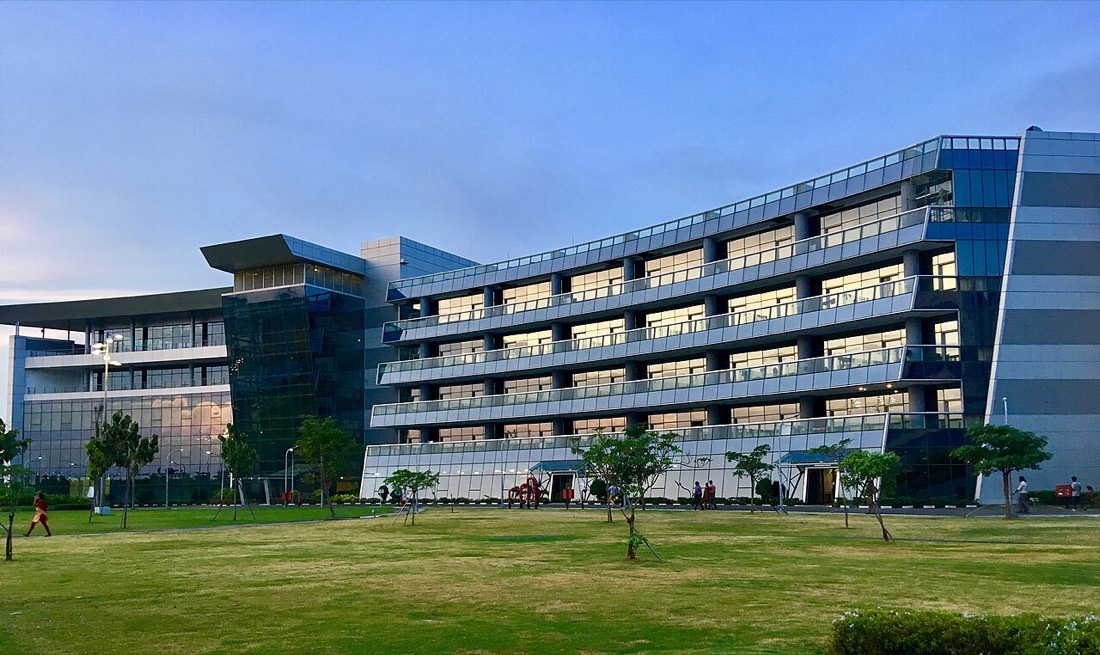
The practical effect is that IT companies are nearly immune to interest rate movements. When the RBI raises rates, TCS does not feel it in its P&L because it has no meaningful debt to service. This is part of why IT companies command stable, premium valuations: their earnings are predictable and not exposed to financing risk.
Capital-intensive businesses live with debt
Tata Steel, JSW Steel, and other manufacturers sit at the other end of the spectrum. Building and running a steel plant requires enormous upfront capital: blast furnaces, raw material inventory, port facilities, logistics. No steel company funds this entirely from equity. The economics of the business make debt a structural feature, not a management failure.
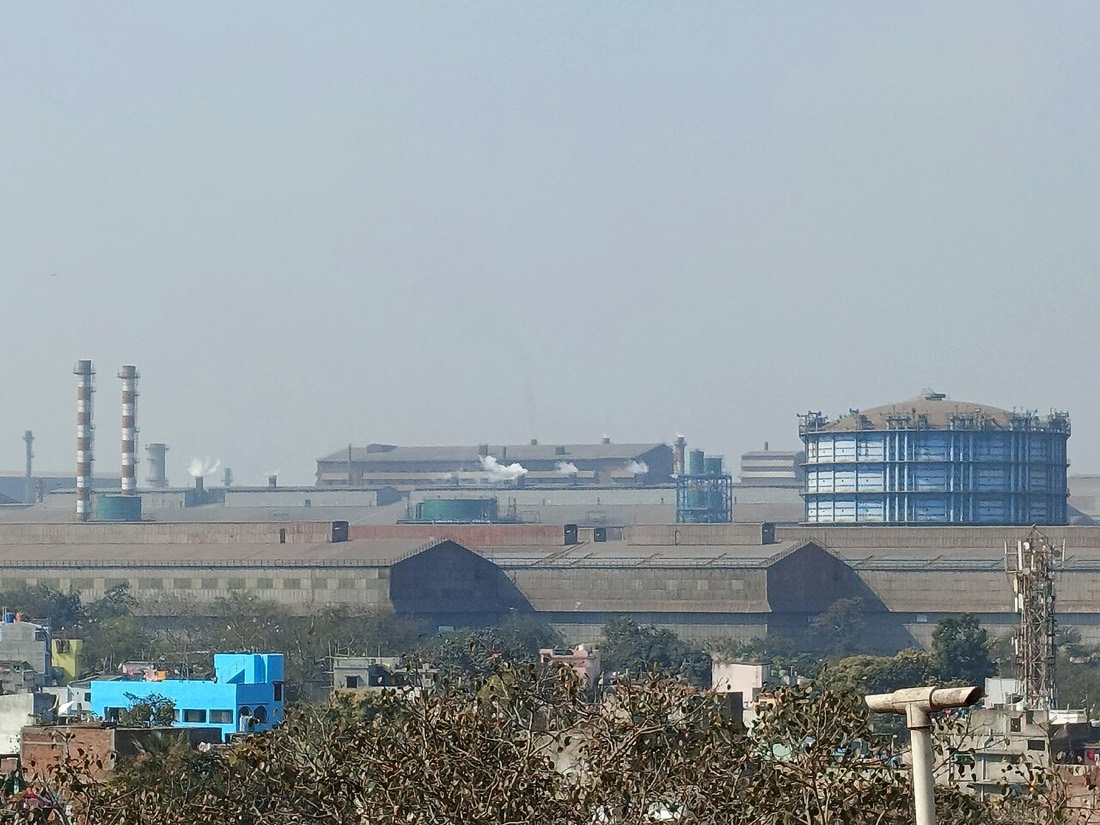
Tata Steel's D/E has swung with acquisitions and commodity cycles. After acquiring Corus (a UK steel company) in 2007, its debt load rose sharply. The 2008 global financial crisis hit just as that debt was sitting on the books. The company survived, but the stress was real. In later years it worked leverage down, and by March 2026 its borrowings had eased to Rs 92,382 crore from Rs 94,801 crore a year earlier even as it kept building plant.
Reliance Industries tells a different version of the same story. By 2020, after years of massive investment in Jio and retail infrastructure, Reliance had accumulated substantial debt. Then came the rights issue, the Jio stake sales to Facebook and Google, and a focused effort to become net debt-free. Mukesh Ambani set a net-debt-zero target at the August 2019 AGM and declared it met in June 2020, nine months early, after the Jio stake sales and a Rs 53,125 crore rights issue. Gross borrowings never disappeared, which is why Reliance still shows a D/E of 0.45 today: net debt nets off cash, the ratio in the table does not.
What high D/E means in practice
A company with high debt is exposed in two specific ways. First, rising interest rates increase the cost of servicing that debt, compressing profit margins even if the business itself is performing fine. Second, any revenue shock or industry downturn reduces the cushion between operating cash flow and debt repayments, raising the risk that obligations cannot be met.
Interest coverage ratio is the companion metric that tells you whether current profits can comfortably service the debt. A company earning Rs 500 crore in operating profit before interest, with annual interest payments of Rs 100 crore, has an interest coverage of 5x. Comfortable. If profits fall to Rs 120 crore and interest stays at Rs 100 crore, coverage drops to 1.2x. Dangerously thin.
Telecom companies in India have carried high D/E for years because spectrum acquisition is mandatory and enormously expensive. Airtel and Vodafone Idea both built large debt piles bidding for 4G and 5G spectrum. The FY26 numbers show how far apart they ended up. Bharti Airtel's operating profit of Rs 1,16,514 crore covered its Rs 21,555 crore interest bill about 5.4 times, while Vodafone Idea's Rs 18,859 crore of operating profit did not cover its Rs 21,495 crore of interest at all. Airtel strengthened its balance sheet through equity raises and tariff hikes; Vodafone Idea shows in real time what happens when a capital-intensive business with high debt loses a price war.
Debt quality matters as much as quantity
Not all debt is equal. Short-term debt that must be refinanced frequently carries more rollover risk than long-term bonds. Foreign currency debt carries exchange rate risk that rupee debt does not. Secured debt backed by assets is treated differently by lenders than unsecured debt. A company with Rs 5,000 crore in long-term fixed-rate rupee bonds is in a fundamentally different position from one with Rs 5,000 crore in short-term variable-rate foreign currency loans, even though the D/E ratio looks identical on the surface.
The ratio is the starting point. The nature, tenure, and cost of the debt determines the actual risk.