A company spending its own cash to buy its own shares sounds circular until you see what it actually changes. Wipro's board approved a buyback of up to 60 crore shares, about 5.7% of its equity, at Rs 250 apiece, a premium of nearly 23% to its pre-announcement price of Rs 203.11, for a total outlay of up to Rs 15,000 crore, one of several buybacks that have pushed 2026's total past Rs 25,000 crore, the highest in three years.
The mechanics are simpler than the headline number suggests, and 2026 happens to be the year India's buyback tax rules changed for the second time in under two years, which makes this a good moment to understand both pieces together.
How the tender offer actually works
Wipro fixed 5 June 2026 as the record date, and every shareholder who held shares by then could tender some or all of them during the window from 11 to 17 June, at the fixed Rs 250 price, well above the market price at announcement. Shareholders are not forced to participate; a buyback is an offer, not a mandatory transfer, and anyone who prefers to keep holding simply does nothing.
SEBI requires at least 15% of any buyback to be reserved for small shareholders, those holding shares worth up to Rs 2 lakh, which in Wipro's case worked out to roughly 9 crore shares, about Rs 2,250 crore of the total offer, specifically to stop a buyback from becoming a mechanism that only benefits large institutional holders. Shares a company buys back are extinguished entirely, not resold or held in treasury the way some other markets allow, so the total share count falls permanently.
Why the tax story matters more than usual this year
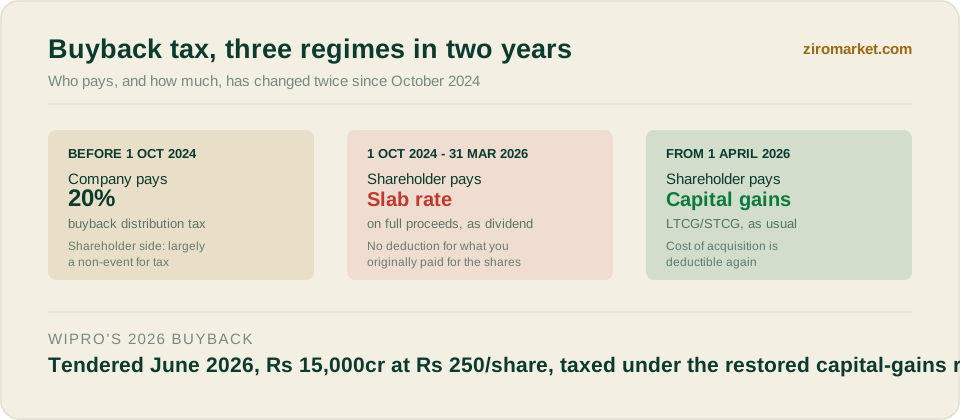
Buyback taxation in India has gone through three distinct regimes since 2024, and which one applied changed what a shareholder actually kept. Before October 2024, the company itself paid a 20% buyback distribution tax, and the shareholder's side of the transaction was mostly a non-event for tax purposes. From 1 October 2024 to 31 March 2026, that burden shifted entirely onto shareholders: the full buyback proceeds were taxed as deemed dividend at the shareholder's slab rate, which could run as high as about 35.88% with surcharge and cess, with no deduction allowed for what the shareholder had originally paid for the shares. Dividends, which are still taxed at your slab rate, are covered in how dividends are taxed in India.
The Income Tax Act, 2025, which took effect on 1 April 2026, reversed the deemed-dividend treatment and restored capital gains taxation for buybacks, letting shareholders deduct what they originally paid before computing tax on the gain, taxed at the same rates our capital gains guide covers for regular share sales. Wipro's buyback ran its tender window in June 2026, meaning it fell under this restored, more favourable regime rather than the harsher deemed-dividend rules that applied for the eighteen months before it.
What a buyback tells you, and what it does not
A company announcing a buyback is making a cash-backed statement that it finds its own shares worth buying at the current price, which is a stronger signal than a verbal claim of confidence because it costs real money. Wipro's 23% premium to its pre-announcement price made that statement explicit in rupee terms rather than leaving it implied.
What it does not guarantee is that the stock goes up from here, or that the company had no better use for the cash. A buyback permanently removes that cash from the business, the same trade-off our promoter holding and bulk deal pieces cover from the ownership-structure side, so the honest question for any buyback is always the same one: would that cash have compounded faster reinvested in the business, or was returning it genuinely the better use. Wipro's own history of repeated large buybacks, several times over the past decade, suggests a company that has made returning cash a habit rather than a one-off signal. A buyback also sits in the same family of corporate actions as our stock splits and bonus issues explainer, since both change the number of shares outstanding without a company's underlying business changing a bit, just by moving value in opposite directions: a bonus hands out more shares for free, a buyback retires shares in exchange for cash.