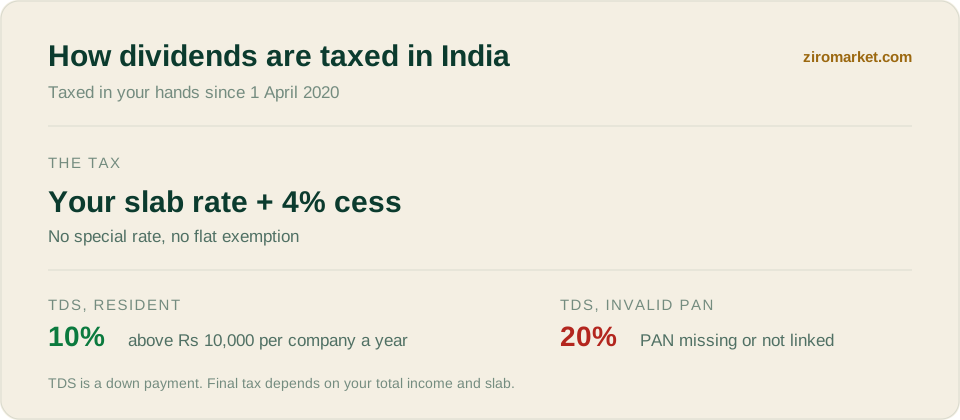
A dividend feels like free money until the tax arrives. Dividends are taxed in India at your own income tax slab rate plus 4% cess, with the company deducting 10% TDS once the total from it crosses Rs 10,000 in a year, so what you keep depends on your slab and not on the company. The rule has stood since 1 April 2020, when the dividend distribution tax on companies was abolished.
How are dividends taxed in India?
Your dividends are added to your total income and taxed like salary or interest. There is no special dividend rate and no flat exemption, so someone in the 30% slab loses about 31.2% of every dividend rupee once cess is added, before any surcharge. Mutual fund IDCW payouts are treated the same way.
When does TDS apply on dividends?
The company or the mutual fund deducts tax before paying you. A resident individual pays no TDS if dividends from a company total Rs 10,000 or less in the year, but once they cross it, 10% is deducted on the whole amount. The limit is per company, so an interim and a final dividend from the same company are added together.
If your PAN is missing, invalid or not linked with Aadhaar, the TDS rate jumps to 20%. Check the details your depository holds before a record date, since the company deducts based on what it sees.
How much tax will you actually pay?
Two made-up cases show why TDS and final tax are different things. The slab rates are the new-regime rates from the FY27 tax regime comparison.
TDS is only a down payment, not your final tax. In Case A the 20% slab plus 4% cess makes Rs 12,480, so Rs 6,480 is still due through advance tax or the return. In Case B the new regime's rebate makes total income up to Rs 12 lakh tax-free, so the Rs 5,000 deducted comes back as a refund after you file. These are illustrations, not tax advice.
How do you check that the tax was credited?
Every rupee of TDS should appear in your Annual Information Statement on the income tax portal, and you can only claim credit for what shows up there. Compare it against the dividend statements from your broker or depository. If a company deducted tax but the credit is missing, the mismatch is easiest to fix before you file.
If the balance due after TDS is Rs 10,000 or more, you generally need to pay it as advance tax in instalments through the year instead of waiting for the return. Dividends arrive unevenly, with many final dividends paid after annual general meetings in mid-year, so it helps to estimate the year's total early.
What about NRIs and the new Form 121?
Non-resident shareholders face TDS at 20% plus surcharge and 4% cess, unless a tax treaty gives a lower rate, which needs a tax residency certificate, an electronically generated Form 41, a PAN copy and a declaration of beneficial ownership. Where a treaty rate applies, no surcharge or cess is added.
Are dividends taxed more heavily than capital gains?
Often yes. Dividends are taxed at your slab rate, which can reach 30% plus cess, while listed-equity short-term gains are taxed at 20% and long-term gains at 12.5% above Rs 1.25 lakh a year. That gap changes how a payout feels, and it is why the buyback tax rules matter to holders of the same company. Capital gains are covered in capital gains tax on shares and mutual funds.
For a high-slab investor, a stock's quoted dividend yield overstates what lands in the account. A 3% yield taxed at 31.2% leaves roughly 2.1% after tax, which is a fair figure to compare with other returns.
The number to check each financial year is your own slab, because it decides how much of the next dividend you keep.