The inflation India spent all year worrying about was supposed to arrive through the fuel pump. It arrived through the vegetable market instead.
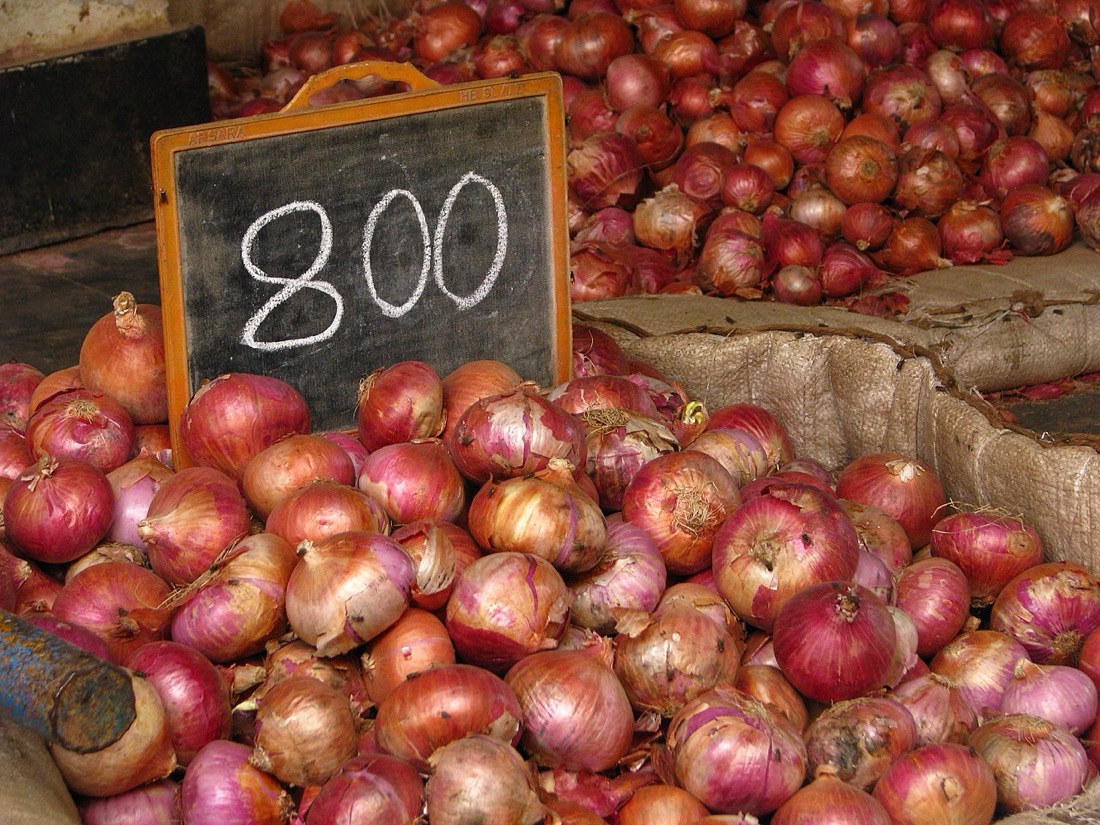
India's consumer price inflation rose to 4.82% year on year in August 2026, a seven-month high, from 4.45% in July, with food inflation at 5.95% and onion, ginger and garlic prices up 48.27%, 73.82% and 43.6% respectively.
The composition is what makes this print awkward for policy. Oil at more than $100 a barrel is a supply shock a central bank can argue for looking through. Vegetable prices at these levels are what households actually experience as inflation, and they shape expectations far faster than a diesel index does.
What the numbers actually say
The gap between the headline and the food index is the whole story. Headline inflation at 4.82% sits inside the Reserve Bank of India's 2% to 6% tolerance band, while food at 5.95% is pressed against the top of it.
The individual food lines explain the jump better than any aggregate. Onion inflation at 48.27%, ginger at 73.82% and garlic at 43.6% are the kind of numbers that come from crop damage and supply gaps, not from demand, which is precisely why monetary policy is a poor instrument against them.
Why this makes the RBI's job harder, not easier
A central bank facing a supply-driven food shock has a textbook answer, which is to ignore it and wait for the harvest. The problem in September 2026 is that the food shock arrived on top of an energy shock that is already nine months old, and two supply shocks stacked together stop looking temporary to the people forming expectations.
For borrowers the practical question is narrower than the policy debate. A floating home loan re-prices at its own reset date rather than on the day of any announcement, which our repo rate and home loan EMI explainer sets out.
The external pressure has kept building. Brent crude reached about $107 a barrel by 15 September 2026 after talks between Iran and Gulf states in Oman were postponed, and the rupee slipped to a six-week low past 96 as the US 10-year Treasury yield touched the 5% mark.
That combination closes the policy window. The repo rate has been at 5.25% since the December 2025 cut, and cutting into rising food inflation and a falling currency would push the rupee further, the calculation our will the RBI cut rates in 2026 analysis works through in detail.
Rate cuts do not grow onions, and rate cuts do not reopen the Strait of Hormuz.
The rural signal underneath
The rural and urban split deserves more attention than it usually gets. Rural inflation at 5.23% is running almost a full percentage point above urban inflation at 4.31%, and rural food inflation at 5.95% is above the urban 5.64%.
The same squeeze is visible abroad. Lululemon fell about 18% after cutting guidance a third time and McDonald's hit a 52-week low on weaker low-income spending, a pattern our US consumer slowdown piece reads across to Indian festive demand.
Food is a bigger share of the rural consumption basket, so a vegetable-led shock transfers more of its weight to rural households, which are also the households that drive volumes for two-wheelers, entry-level consumer goods and the mass segment of most FMCG portfolios.
For anyone reading company results in October, that is the line to connect. Rural demand recovery has been the single most repeated phrase in Indian earnings calls this year, and this print works against it.
What investors should watch
The first is whether food inflation is a harvest problem or a monsoon problem. Vegetable spikes from a supply gap reverse within a quarter. Ones caused by a poor monsoon do not, and India's 2026 monsoon was forecast below normal, a risk our monsoon 2026 piece covered.
The second is core inflation, which is the number the RBI actually acts on. Headline prints driven by onions and crude tell the committee about the shock. Core tells it whether the shock has spread into services, rents and wages, and that is the threshold for policy to respond.
The third is the Federal Reserve, which raised rates to 3.75% to 4.00% on 16 September, and the widened rate gap, pressure the rupee further and import more inflation, as our US CPI August 2026 piece sets out.
The fourth is the October MPC meeting. A hold is now the overwhelming expectation, so the language about the growth-inflation balance will matter more than the decision.
Risks to monitor
The second risk runs the other way. Base effects turn favourable later in the year, and a normal winter crop would pull vegetable inflation down quickly, which would leave the RBI having tightened its language into a fading problem.
The third is the currency loop. A weaker rupee raises imported food and fuel costs, which raises CPI, which delays cuts, which does nothing for the rupee if the Federal Reserve is also tightening. This is general information, not investment advice.
The uncomfortable detail in this release is not the headline number. It is that the two fastest-rising items in the entire index were ginger and onions, which no central bank on earth has a policy instrument for.