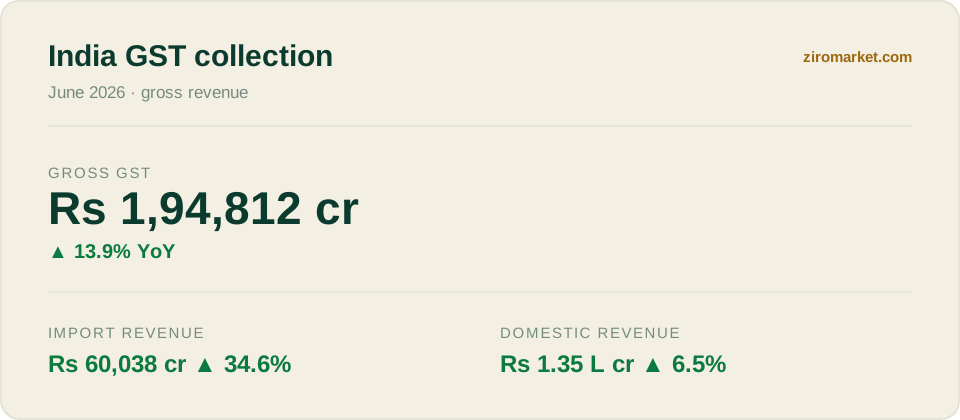
India's tax till kept ringing in June. Gross GST collections rose 13.9% year-on-year to Rs 1,94,812 crore in June 2026, powered by a sharp 34.6% jump in import revenue, in a sign that economic activity stayed resilient even as the stock market turned cautious. It is another strong monthly print for a tax that doubles as a real-time gauge of the economy.
The detail matters as much as the headline. The growth leaned heavily on imports, while domestic revenue rose at a steadier pace, a split that tells a more nuanced story than the top-line number alone.
What Happened
The Finance Ministry's provisional data showed a strong month. At Rs 1,94,812 crore, June 2026 gross GST collections were up 13.9% from Rs 1,71,105 crore in June 2025, continuing a run of healthy monthly figures that have become a reliable marker of India's economic momentum.
The composition is where it gets interesting. Here is how the two main components moved.
The headline growth was powered mainly by imports, which grew more than five times faster than domestic revenue. That points to strong trade-linked activity, possibly helped by higher import volumes and the rupee's weakness, which lifts the rupee value of imported goods.

Why This Matters for Investors
GST is one of the cleanest real-time reads on the economy. Because the tax is paid on most goods and services, a 13.9% rise signals that consumption, trade, and compliance are all holding up, giving a timely snapshot that arrives faster than GDP or other lagging data.
For the government, strong collections mean more fiscal room. Steady revenue growth supports spending on infrastructure and welfare without widening the deficit, which is a positive backdrop for the broader economy and for sectors that depend on public capex.
The import-led nature of the growth is worth noting, though. Domestic revenue growth of 6.5% is solid but more moderate, suggesting home consumption is growing at a measured pace rather than booming. The trade-linked surge is doing the heavy lifting, which is a subtler picture than the strong headline implies.
Market Reaction
Despite the strong data, the market did not celebrate. On July 1, 2026, Indian equities stayed cautious, with the Nifty holding below 24,000, as global worries outweighed the upbeat domestic print. US-Iran tensions, the July 24 trade-deal deadline, and expectations of US Fed rate hikes kept investors defensive, as covered in our Indian stock market today wrap.
The muted response highlights a familiar theme: strong domestic fundamentals can take a back seat to global risk sentiment. The GST figure is a genuine positive for the economy, but the market is trading on other worries for now.
What Investors Should Watch
The first thing to watch is whether domestic revenue growth picks up. The 6.5% rise in domestic GST is the truer read on home consumption, so an acceleration there would be a stronger signal than an import-led headline.
The second is the trend over coming months. One strong print is encouraging, but a sustained run of double-digit growth would more firmly confirm the economy's momentum into the second half of 2026.
The third is how the data feeds into policy. Strong collections give the government fiscal flexibility, so watch for any signals on spending or tax measures that could follow from a healthy revenue position.
Risks to Monitor
The clearest risk is that the import-led growth masks softer domestic demand. If domestic revenue keeps growing at a moderate pace while imports slow, the headline GST number could cool.
A second risk is the global backdrop. A weaker rupee lifting import values is a double-edged sword, since it also raises the cost of imports and can add to inflation.
The third is that strong data does little for the market while global risks dominate, as July 1 showed. Good macro news matters for the long-term story, but near-term direction still rests on the trade deal, oil, and the Fed. This is general information, not investment advice.
A 13.9% jump in GST is a reminder that beneath the market's nerves, India's economy is still busy. Whether that domestic strength eventually pulls the stock market up, or global worries keep it capped, is the question hanging over the rest of 2026.