A single day undid a month of relief. Brent crude jumped 4.4% to close at $102.31 a barrel on 1 October 2026, reversing its late-September fall to about $97, after US officials said a third aircraft carrier strike group is heading toward the Middle East and major Chinese refiners suspended most fuel exports for October. US West Texas Intermediate climbed 2.7% to $92.87.
Two unrelated shocks landed within hours of each other. One was military: a build-up of American naval power near Iran that several outlets read as preparation for a wider campaign, not routine rotation. The other was commercial: China quietly choosing to keep its own fuel at home, removing supply from a market that had barely found its footing.
For India, which buys more than 9 of every 10 barrels of crude it burns from abroad, the reversal is a reminder that September's relief was a workaround around a shipping chokepoint, not a resolution to the conflict behind it.
What Happened
US officials told reporters that the USS Theodore Roosevelt carrier strike group, which departed San Diego on 27 September 2026, is expected to reach the Middle East by late November, accompanied by up to 10,000 additional US troops and Marines. The USS George H.W. Bush and USS George Washington are already deployed in the region, so the Roosevelt's arrival would bring three American carrier strike groups into the Middle East simultaneously, an unusually large concentration of force.
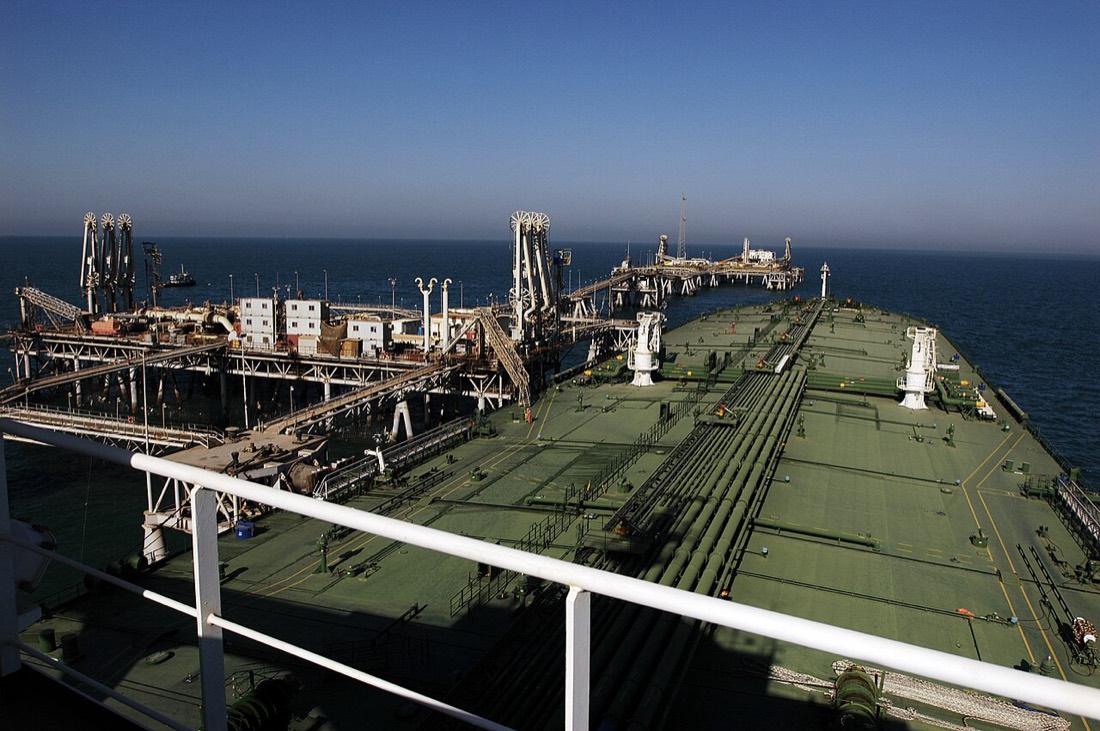
On the same day, major Chinese refiners including PetroChina suspended most October fuel export cargoes, while Zhejiang Petrochemical did not schedule shipments during China's week-long National Day holiday, which runs to 7 October. Kpler estimated China's commercial diesel and gasoline stocks were tens of millions of barrels below the levels Beijing wants restored before allowing exports to resume. The timing was coincidental, but the effect on the oil market was additive: two separate supply-side shocks landing on the same trading day.
Why This Matters for Investors
The reversal shows how little margin exists in this market right now. Saudi Arabia's workaround around the Strait of Hormuz, which let Middle East crude exports recover to an estimated 16.3 million barrels a day in September, fixed a logistics problem. It did nothing to resolve the underlying US-Iran standoff, so a single report about ship movements was enough to erase most of a month's relief in one session.
For India specifically, the stakes are structural rather than incidental. India's crude import dependence crossed 90% in FY26, and economists estimate every sustained $10 move in the oil price is worth 20 to 30 basis points of India's GDP growth. A jump back above $100 widens the import bill and pressures the rupee regardless of whether the underlying cause is a blocked strait, a halted export programme, or a carrier that never fires a shot.
The timing compounds the problem. The spike lands four days before the Reserve Bank of India's 7 October rate decision and a week before Q2 FY27 earnings season opens with TCS, stacking a fresh external shock onto two events investors were already watching closely.
Market Reaction
US equities largely shrugged off the news. The S&P 500 closed up 0.19% at 7,666.45, the Dow Jones Industrial Average rose 0.04% to 50,926.56, and the Nasdaq Composite gained 0.04% to 26,871.60 on 1 October 2026, helped by Treasury yields retreating from their highest levels in more than two decades. Reports suggested traders were also weighing whether the US President would wait until after the midterm elections before taking further military action, which tempered the immediate reaction.
Indian markets reacted far more sharply. The Nifty 50 fell 0.88% to 22,421.95 and the Sensex fell 0.79% to 71,909.70 on 1 October, a fresh six-month low that extended what several market reports describe as an eighth straight losing week, the longest such run in 25 years. The rupee weakened to about 96.3 per dollar on the same day, within a rupee of its record low of 96.96 set in May 2026.
The gap between the two reactions is the story. America is a large net oil producer with diversified equity leadership; India is a large net importer whose currency and inflation outlook move directly with the oil price. The same headline landed very differently on the two markets.
What Investors Should Watch
The first is whether the carrier deployment is posture or a genuine prelude to strikes. Troop and ship movements are a leading indicator traders react to immediately, but the actual market-moving event would be a confirmed strike or a further blockage of shipping, neither of which had happened as of 2 October.
The second is when China resumes fuel exports. Beijing's National Day holiday runs to 7 October, and refiners could restart shipments once domestic stocks are rebuilt and the holiday clears, which would remove one leg of this week's spike without needing any change on the military side.
The third is the Reserve Bank of India's 7 October decision, where a hold at 5.25% remains the consensus but the tone may harden given oil's reversal, a question our will the RBI cut rates again in 2026 piece tracks.
The fourth is the 30-day window under the US Russia sanctions law, closing around 18 October, a separate tariff risk for India that would compound any oil-driven pressure rather than offset it, covered in our Russia sanctions and India piece.
The fifth is Q2 FY27 earnings, opening with TCS on 8 October, which will show whether Indian companies can absorb a quarter of elevated fuel and freight costs without the margin damage that a sustained oil shock usually brings.
Risks to Monitor
The second risk is policy collision. The RBI's 7 October decision, the US tariff deadline around 18 October, and whatever the carrier build-up produces could all land inside the same three weeks, each manageable alone but harder to absorb together.
The third is the US government shutdown, which began on 1 October and has delayed the economic data the Federal Reserve would normally use ahead of its own 27-28 October meeting, adding uncertainty on top of the oil story, a separate story our US government shutdown piece covers. This is general information, not investment advice.
Three carrier strike groups in one region, a major refiner choosing to keep its own fuel at home, and an oil price back above $100 inside a single trading day is not a forecast of what happens next. It is a reminder of how thin the floor under this market still is, four months after the shock first began.